
Care and Cultivation of the Alpine Clematis
High in the rugged rocks of the mountains, where most flowers shrink from the icy wind and stay close to the ground, one plant dares to ascend. The alpine clematis brings this fascinating alpine resilience into our gardens as a robust mountaineer. Botanical records show that the wild alpine clematis effortlessly withstands extreme temperatures of up to -30 °C.
Have you ever bitten off more than you can chew on a bare north-facing wall? In practice, few hardy climbing plants for partial shade have proven as effective as this easy-care wonder. While other plants are still dormant, it already unfurls its nodding bell-shaped flowers in early spring. With minimal care, this plant transforms even uninviting walls into a sea of blossoms.
What distinguishes the Alpine clematis from other clematis
In comparison to Clematis alpina and Clematis montana Our native wild species displays a much more restrained elegance than its vigorously growing relatives. Bell-shaped violet flowers are its hallmark, botanically consisting of four colored sepals – known as tepals. As typical buttercups from the alpine region, these nodding beauties effortlessly defy late frosts in the garden.
To climb safely, the plant uses a clever technique: it's a tendril climber. Instead of forming sticky adhesive pads like ivy, its flexible petioles wrap around thin branches or fences like little hands. Therefore, those who prefer this robust species over delicate cultivated varieties only need a delicate climbing frame. Such a frame and the right location lay the foundation for healthy growth.

The Ideal Location: Why Cool Feet and a Clear Head Are Crucial
To prevent the delicate leaves from wilting in the heat, mountain clematis prefer locations where the principle of „cool feet, bright head“ prevails. South-facing walls that retain heat are therefore taboo. Instead, cleverly shade the sensitive root area with flat stones or cushion-forming companion plants. This simple measure acts like a natural air conditioner and keeps the soil pleasantly cool.
Soil composition is equally important for lime-loving mountain plants. As so-called „calciphiles,“ the species requires sufficient lime in the soil to be able to absorb nutrients. The perfect location for the clematis specifically combines these four factors:
- Light Bright partial shade without direct midday sun.
- Floor Humus, well-draining, and slightly calcareous.
- Moisture Evenly moist, but never waterlogged.
- Protection Reliably wind-protected, cool root zone.
Arriving at the ideal spot, the correct planting depth ensures long-term survival.
The 10-centimeter rule for planting
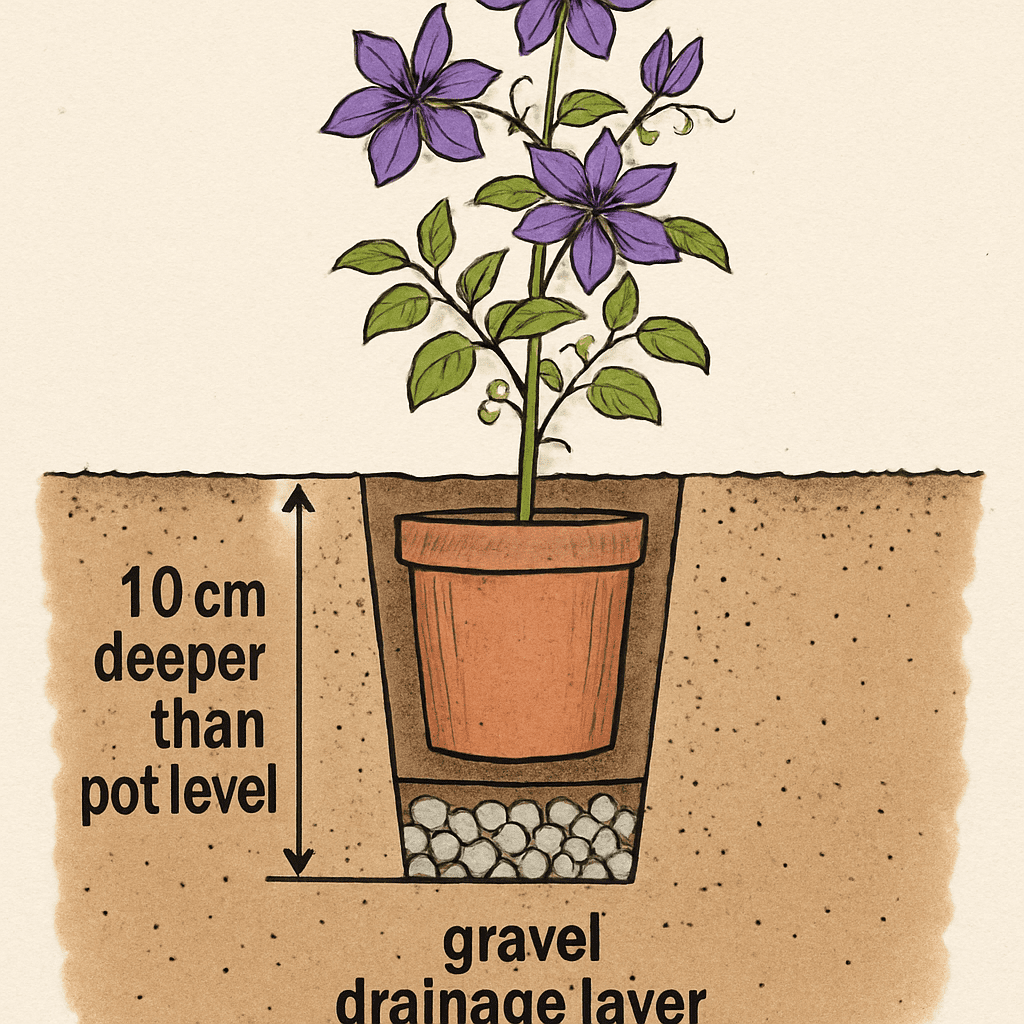
Unlike many garden plants, this climbing artist requires true depth. Planting clematis first requires a drainage layer of gravel at the bottom of the planting hole, which reliably drains excess water. Then, place the root ball exactly ten centimeters deeper in the soil than it was in the pot. This will bury the first two nodes – small thickenings on the stem from which fresh shoots will later grow – protectively in the soil. This acts as a built-in insurance policy: If the upper branches freeze in a harsh winter, the plant will effortlessly sprout anew from the depths.
For the vertical growth, you now need to install a suitable trellis for delicate climbing plants. The alpine clematis clings tightly with its flexible leaf stalks, much like delicate fingers. Choose trellis bars that are a maximum of one to two centimeters thick; it cannot grip wide wooden slats. After securely anchoring the plant, proper watering protects against the dreaded clematis wilt.
Clematis Root Rot Prevention: Proper Watering Without Waterlogging
After planting, watering determines the vitality of your Clematis alpina. To avoid dangerous waterlogging in climbing plants, the simple finger test helps: If the soil feels moist two centimeters deep, pause. Always water directly onto the root area and never over the leaves, as wet foliage actively attracts stubborn fungal diseases.
If individual shoots suddenly droop and turn black, quick action is required. To specifically treat the dreaded Clematis wilt, cut back affected vines immediately into healthy wood and dispose of them in household waste. However, apart from such exceptional situations, pruning shears should be left alone for this robust plant – a radical cut would ruin the bloom.
Section 1: Why Radical Pruning Ruins Blooms
Many climbing plants require a radical cutback in autumn, but that would be fatal for the alpine clematis. It blooms on so-called „old wood“ – the shoots that grew the previous year. This explains the fundamental differences between pruning groups 1 and 2: while summer late bloomers are cut back severely, the care for pruning group 1 is more like a light trim for shaping rather than a drastic operation.
To keep your plant strong and reliably blooming, follow these three steps:
- Timing The perfect time for pruning Clematis alpina It is early summer, right after the bloom.
- Selection Prune only completely dead or frozen vines.
- Method: Thin out overly dense branches carefully, rather than cutting them back close to the ground.
Those who don't cut back too much also provide a buffet for wild bees and decorative seed heads in late summer.
A buffet for wild bees and decorative seed heads
The alpine clematis rewards gardeners with its blossoms as early as spring. As a prime example of early-flowering climbing plants, it provides much-needed nectar for awakening wild bees from April onwards. Since insect-friendly climbing plants are rare in cool climates, Clematis fills a hugely important ecological gap in shady locations.
After the flowers fade, the visual spectacle transforms. The plant now forms so-called achenes – decorative, feathery seed heads that resemble silky dandelions. This delicate silver adornment remains attached well into winter, picturesquely catching the first frost. Proactive care accompanies this fascinating natural phenomenon from the first bud to the wintry seed head.
Your Year-Round Plan for the Alpine Clematis
Shady north walls or drafty high-lying garden spots no longer have to remain unplanted. The alpine clematis reliably transforms even cool locations into a sea of spring bells. Success is based on a simple routine: keep the roots cool, provide a stable trellis, and refrain from heavy pruning.
While some climbing plants demand intense and constant care, this alpine specimen thrives largely on its own. Patience in the first year pays off, as the plant develops a strong root system during this time for a long-lasting floral display. A sunny, semi-shady spot in the garden is all that's needed for this robust mountain climber to reach its full potential.