
Care and cultivation of Alpine asters in the garden
Imagine a garden that captures the rugged yet breathtaking beauty of high mountain landscapes. The Alpine aster (Alpine asteris one of the most fascinating and rewarding plants for bringing that unique alpine flair into your home. With its vibrant spring and early summer blooms, it's an absolute must-have for any rock garden, trough, or dry stone wall. For those looking internationally for perennial rock garden plants Anyone searching will inevitably come across this robust perennial. It not only brings vibrant shades of violet, pink, or white to your garden beds, but it's also a real magnet for beneficial insects. The ecologically valuable concept of Attracting pollinators to rockeries This can be easily achieved with the Alpine Aster, as wild bees, bumblebees and butterflies love its open, star-shaped flowers.
This guide will tell you everything you need to know to successfully cultivate this fascinating perennial in your own garden – from soil preparation to care and propagation.

The ideal Alpine Aster location and the right soil mix
So that your mountain asters thrive for many years, the conditions of their natural habitat—the Alps and Pyrenees—must be recreated in your home garden. The optimal Alpenaster location is absolutely crucial for the plant's longevity, resilience, and flowering exuberance.
Light and sun requirements
Alpine asters are absolute sun worshipers. They fit seamlessly into the botanical category of full sun herbaceous perennials This means for practical purposes: The more direct sunlight they receive, the more compact they grow and the more abundant their blossoms will be. An ideal location is in a rock garden, on top of a dry stone wall, or in the front of a perennial bed with full southern exposure, provided it is well-ventilated. In partial shade, they tend to grow scraggly and bloom significantly less.
Soil conditions and substrate
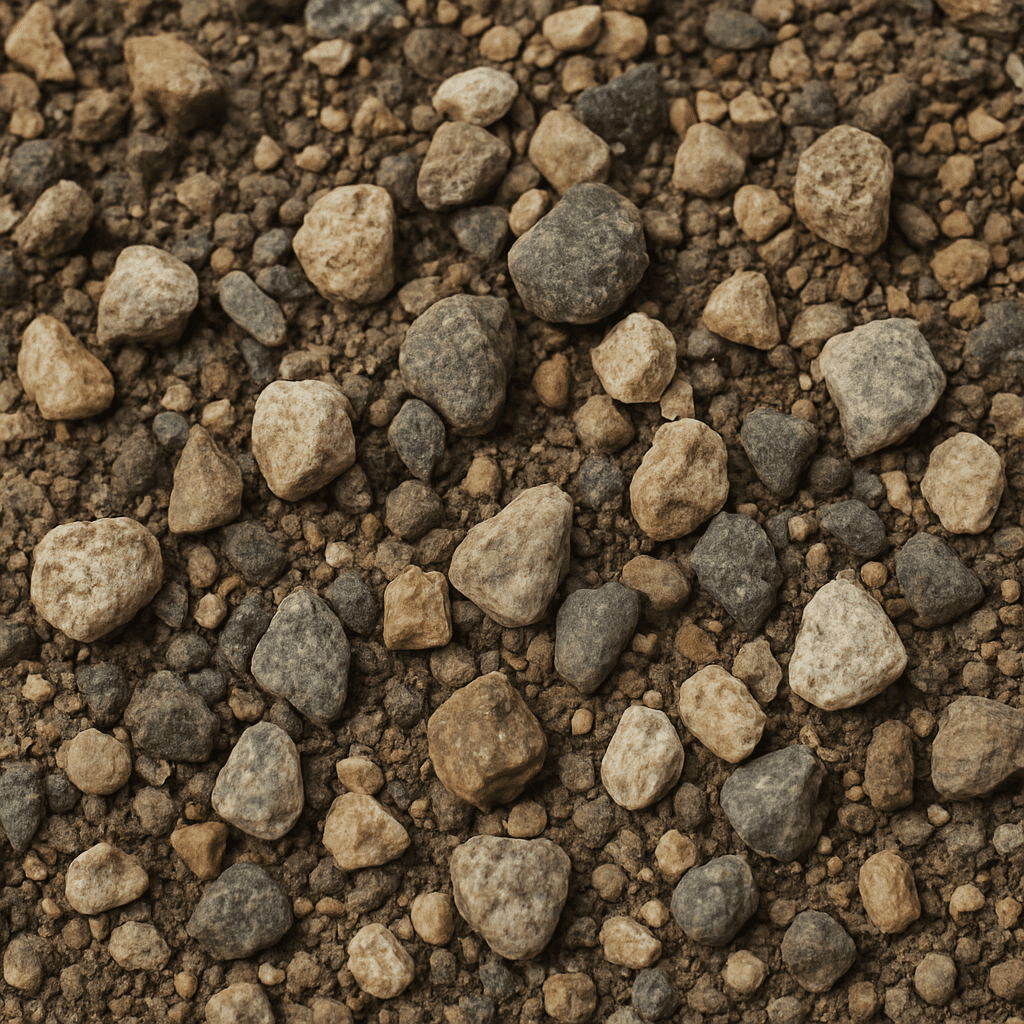
When we garden experts talk about the Soil for alpine gardening should drain exceptionally well. Alpine plants are native to rocky, mountainous regions with thin, porous soils. Replicating these conditions is key to success. A good general mix for alpine gardening is: * **1 part loam or compost:** This provides some organic matter and nutrients. * **1 part sharp grit or coarse sand:** Essential for drainage and aeration. * **1 part perlite or pumice:** Further improves drainage and prevents compaction. **Key Characteristics:** * **Excellent Drainage:** This is the most crucial factor. Alpine plants do not tolerate constantly wet roots, which can lead to rot. * **Low Fertility:** Many alpine plants thrive in nutrient-poor soils. Overly rich soil can lead to weak, floppy growth and more disease. * **Aeration:** The soil needs to be free-draining and not compacted, allowing oxygen to reach the roots. * **Slightly Alkaline (often):** While not a universal rule, many alpine plants prefer slightly alkaline soil (pH 7.0-7.5). **Variations and Considerations:** * **For Lime-Loving Alpines:** If you have alpines that specifically require alkaline conditions, you can add crushed oyster shells, horticultural lime, or incorporate more limestone chips into your mix. * **For Acid-Loving Alpines:** Some alpines, like certain *Rhododendron* species adapted to alpine conditions, may prefer a more acidic mix. In this case, use ericaceous compost as a base and add grit. * **Potting vs. In-Ground:** The principles remain the same, but for containers, you'll want to ensure the mix is even more porous. Avoid heavy garden soil in pots. * **Top Dressing:** A top dressing of grit or gravel is often beneficial for alpine plants. It helps to keep the crown of the plant dry, deters slugs, and provides a stable environment. **In summary, the best soil for alpine gardening is a gritty, free-draining mix that is not overly rich in nutrients.** The mantra is: extremely permeable, rather lean, and chalky. Standing water is the greatest and often only enemy of the alpine aster.
- Earth adjust: Generously mix ordinary garden soil with coarse sand, fine gravel, or perlite to maximize drainage.
- pH value: Provide a neutral to slightly alkaline soil. Occasional applications of algae lime are very well tolerated.
- Avoid clay soils Avoid heavy, moist soil. If you have such soil, you must create a raised bed or incorporate a thick layer of gravel drainage under the planting site.
Garden design: Companion plants and alpine aesthetics
Professional garden design with alpine perennials is gaining increasing popularity worldwide. In modern landscaping with native alpine flora The alpine aster plays a central and structuring role. Thanks to its creeping, cushion-forming growth, it is excellently suited as Low-maintenance ground cover, effectively suppresses weeds and quickly greens even barren, stony areas.
Choosing the right neighborhood
A particularly picturesque, true-to-life combination can be achieved by Companion planting with edelweiss (Leontopodium alpinum), Houseleek (Sempervivum), or Creeping Phlox. These plants share the exact same requirements for sun and dryness and complement each other visually in a dramatic way.
When planning for continuous bloom, many gardeners encounter the exciting debate Spring bloomers vs. summer perennials. The Alpine aster is a perfect bridge-builder here: it blooms intensely from May to June, perfectly filling the colorless gap between the faded early spring bulbs and the still-budding, classic summer perennials.
Proper Care: Watering, Pruning, and Plant Health
Despite their wild, alpine origins, asters require occasional attention to stay healthy and reach their full potential.
Water requirements and drought tolerance
In nature, these perennials brave weeks of adverse conditions on barren rocks. Gardeners therefore value them as true Drought-tolerant mountain flowers. Nevertheless, you should regularly water newly planted specimens during prolonged dry periods in the first year until they are well rooted.
An important troubleshooting tip: If you've ever desperately wondered: „Perennial leaves may wilt for a number of reasons, including: * **Underwatering:** If the plant isn't receiving enough water, its leaves will lose turgor pressure and droop. This is especially common during hot, dry weather or if the soil drains too quickly. * **Overwatering:** Paradoxically, overwatering can also cause wilting. Soggy soil deprives the roots of oxygen, leading to root rot. Damaged or rotting roots can't absorb water effectively, causing the leaves to wilt. * **Heat Stress:** High temperatures, especially when combined with direct sun and wind, can cause plants to lose water faster than they can absorb it, leading to wilting. * **Transplant Shock:** When a perennial is newly planted or moved, its root system may be disturbed. It can take time for the roots to establish and start taking up water, during which the leaves may wilt. * **Root Damage:** Physical damage to the roots from digging, pests, or diseases can impair water uptake and cause wilting. * **Disease:** Fungal or bacterial diseases, such as wilts (e.g., Verticillium wilt or Fusarium wilt), can infect the plant and block its vascular system, preventing water from reaching the leaves. * **Pests:** Some pests, particularly those that feed on the roots or the vascular system of the plant, can cause wilting. * **Nutrient Deficiencies:** While less common as a direct cause of sudden wilting, severe nutrient deficiencies can weaken a plant and make it more susceptible to wilting from other stressors. * **Soil Compaction:** Compacted soil restricts root growth and air circulation, hindering water and nutrient uptake. * **Windburn:** Strong winds can dry out leaf surfaces quickly, leading to wilting, especially if the soil is dry. To diagnose the specific reason, consider the plant's watering schedule, recent weather conditions, any visible signs of pests or disease, and the condition of the soil.? (Why are my perennial leaves wilting?), with the Alpine Aster, it's almost never due to a lack of water. A limp appearance is usually an alarm sign for too much many Water in the soil that has led to root rot unnoticed. Therefore, always water sparingly and thoroughly.
Targeted pruning for a second bloom
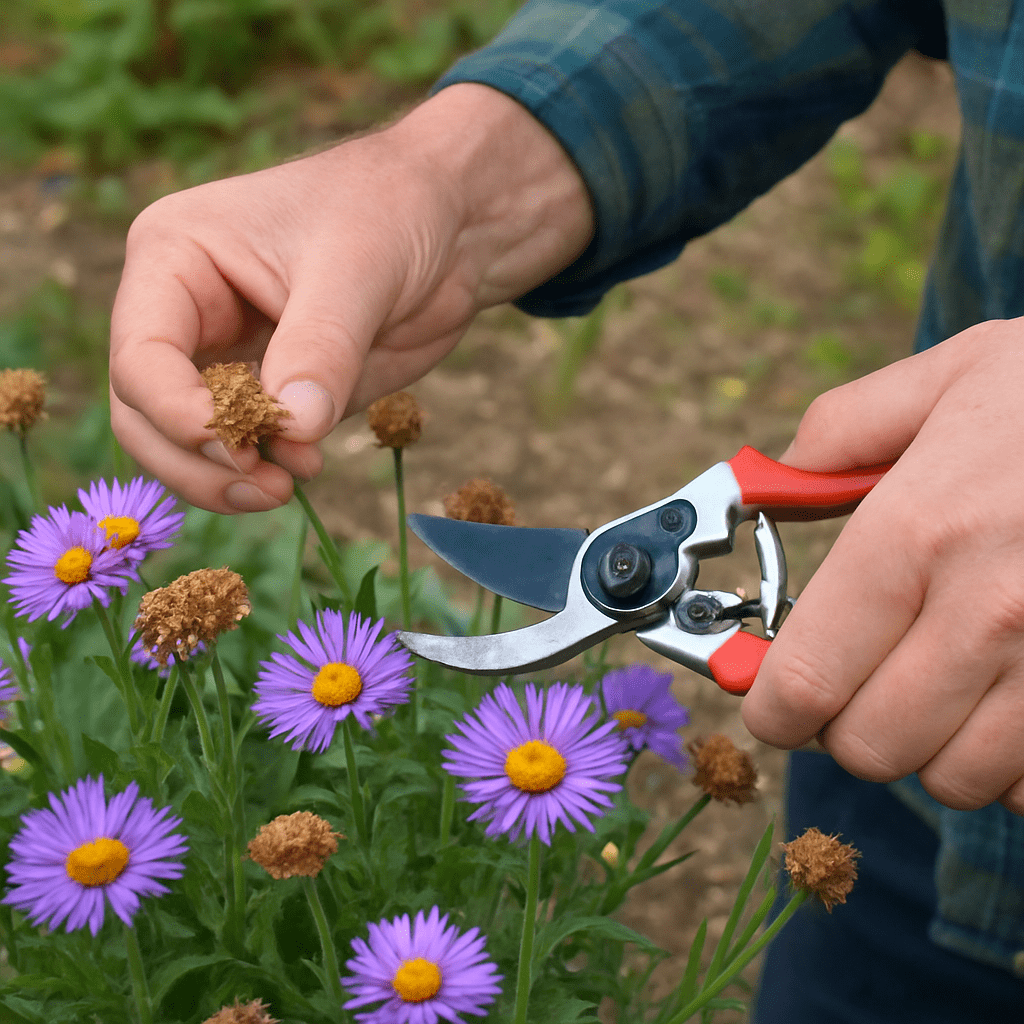
A tried-and-true trick among experienced perennial gardeners is to prune them back right after their main blooming period. Through professional Deadheading techniques for repeat blooms – also the timely pinching off or cutting back of faded flower heads – prevent the energy-draining seed formation for the plant. This way, the Alpine aster redirects its valuable energy into a possible second bloom in late summer and also maintains dense, compact growth for months.
Preventing diseases
The Alpine Aster is generally very robust and not prone to diseases. However, powdery mildew can occasionally be a problem in muggy, warm weather. An essential step for the Preventing powdery mildew in perennials ensures consistently good air circulation. Do not plant asters too close to taller or spreading perennials and always water from below, directly onto the root area. Wet foliage overnight significantly promotes fungal infections.
Propagation: From Sowing to Division
If the Alpine aster feels at home in your garden, you'll likely want to plant more of it soon or rejuvenate older specimens. Two proven methods are suitable for this.
Sowing seeds
The propagating mountain daisies from seed is an exciting, albeit somewhat lengthy, method for passionate hobby gardeners.
- Sow the fine seeds in late winter (February or March) in shallow seedling trays.
- Since asters are so-called light germinators, the seeds may only be pressed very lightly into the moist soil, but under no circumstances covered with substrate.
- Keep the sowing evenly moist at about 15 to 18 degrees Celsius, ideally with a fine spray bottle to avoid washing away the seeds.
Perennial division (Vegetative propagation)
For significantly faster and, above all, true-to-type propagation, the method of Dividing perennial clumps in spring (Dividing asters in spring) the undisputed number one. Asters tend to become somewhat bare and woody in the middle after about three to four years. Carefully dig up these older plants just before new growth emerges. Divide the compact root ball into several fist-sized sections using a sharp spade or an old garden knife. Replant the outer, vital pieces in soil enriched with fresh compost and sand. This measure noticeably rejuvenates the plant and stimulates vigorous new growth.

Overwintering and frost protection
The good news for the end: Alpine asters are absolutely and without restrictions hardy in our latitudes. With the Winter care for hardy species Therefore, there is very little to consider. In their homeland, the natural, deep snow in the mountains serves as a protective, insulating blanket against icy frosts.
- In regions with very cold temperatures and no protective snow cover, you can proactively cover plants with some loose fir boughs in late autumn.
- In winter, pay even more attention to perfect drainage. Waterlogging in winter causes the fleshy roots to rot quickly in the cold soil and is far more dangerous for alpine plants than sub-zero temperatures.
Conclusion: An alpine jewel for any garden
Alpine asterAlpine asteris far more than just an easy-care filler plant for sunny perennial beds. It combines unbridled alpine hardiness with delicate, enchanting blossoms. If you choose the perfect location for your Alpine Aster – fully sunny, calcareous, and above all, extremely well-draining – you will enjoy this undemanding plant for many years to come.
Whether used generously as a compact ground cover, as a vibrant magnet for insects in a gravel garden, or in nostalgic and harmonious company with edelweiss: The Alpine Aster brings the wild, majestic feeling of the mountains directly to your home. With a few simple tricks for pruning and the right, sparing watering, nothing stands in the way of your personal, blooming alpine paradise.