
The benefits of Eremurus (Foxtail Lily) in the garden
Imagine a natural piece of jewelry made of metallic steel blue, majestically enthroned in your flowerbed. The eryngium (Alpine sea holly), also reverently called the „Queen of the Alps,“ immediately draws all eyes with its extravagant appearance. Some garden owners initially avoid the plant because its tips resemble a hardy weed. However, according to plant researchers, this spiky design is pure botanical camouflage.
Behind its rough thistle-like appearance lies a surprising relative of the edible carrot. Those who cast aside this prickly prejudice quickly discover the true benefits of this mountain plant. It enriches modern garden designs as an indestructible highlight and simultaneously offers valuable food for native insects. This fascinating survivor deserves every sunny garden spot with its unique adaptability.
Why the Eryngium Alpinum Is a Camouflaged Relative of the Carrot
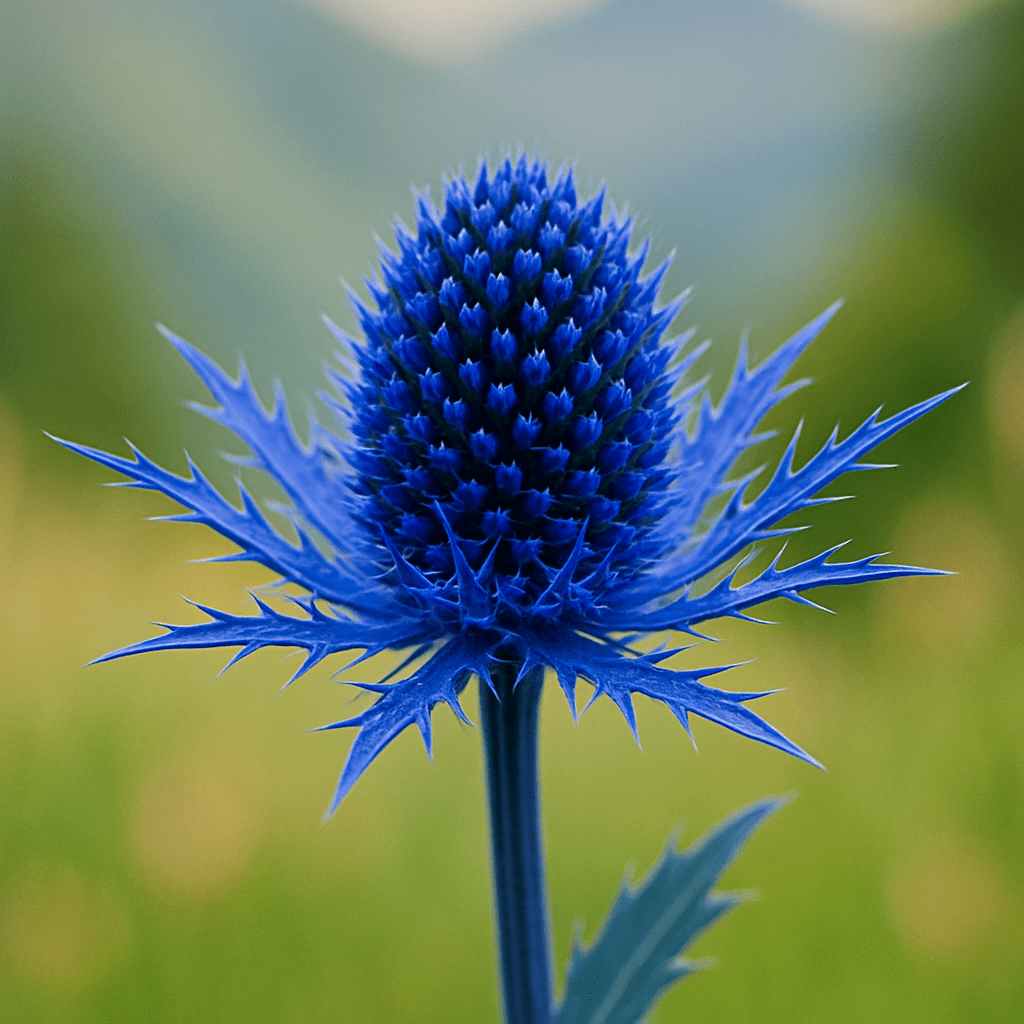
At first glance, the plant appears to be a defensive thistle, but it carries the heart of a carrot. The Alpine Sea Holly (internationally also known as Alpenmannstreu) surprisingly belongs to the Apiaceae family. There are three visible characteristics that distinguish the Alpine Sea Holly from a common field thistle:
- Stem structure The main shoot is completely smooth and has no prickles at all.
- Flower arrangement: Tiny individual blossoms form a dense, cone-shaped head together.
- Leaf shape The leaves close to the ground are astonishingly soft and inconspicuously heart-shaped.
However, the most spectacular detail is the metallic, shiny collar directly below the flower. Botanists call this pointed crown of leaves the „involucre.“ This delicate structure looks like a precious piece of jewelry but functions as a life-saving parasol in nature. The intense blue coloring of the bracts is due to special pigments that protect the sensitive plant from the aggressive UV radiation in the high mountains.
Unfortunately, this luminous beauty awakens desires, which is why we respect the strict protection status of the „Queen of the Alps“ and must never pick wild specimens. Anyone who wishes to cultivate this wonder in their garden will learn from any good care guide for the Alpine Sea Holly that ordinary potting soil is not sufficient.
The Perfect Location: Why ’stony rich‘ is exactly right for this plant
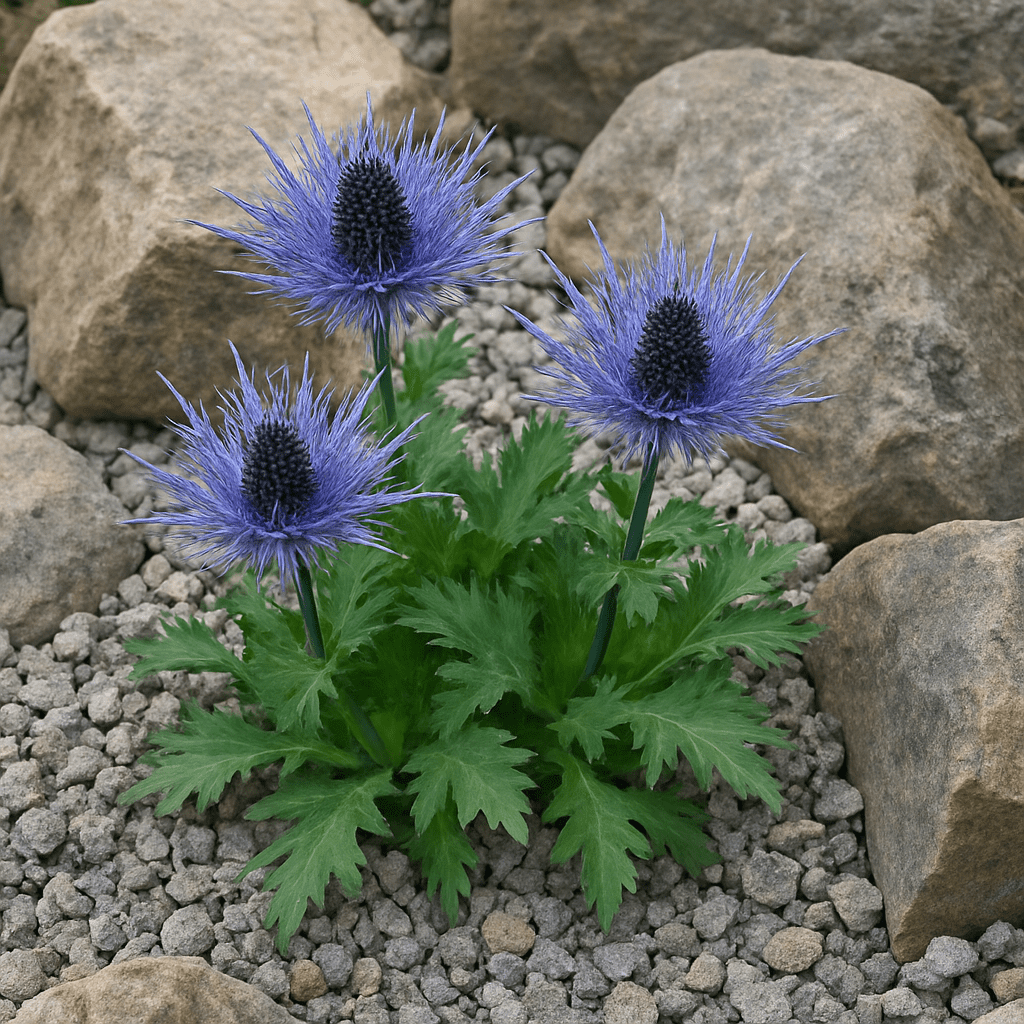
To successfully mimic the unique alpine microclimate for alpine perennials in your rock garden, you need to rethink your gardening approach. The ideal soil for alpine sea holly is not at all nutritious and moist, but extremely poor. Mix your ordinary garden soil generously with coarse sand and gravel until it resembles a dried-up riverbed.
This rocky substrate is the absolute key to the plant's survival. While it tolerates icy temperatures effortlessly, waterlogging in winter is its sure downfall. If the deep taproots stand in cold, wet mud for weeks, they will inevitably begin to rot. Excellent, deep drainage acts as a life-saving water runoff here and guarantees perfect growing conditions for the sea holly.
Besides dry feet, the spiky jewel demands pure sunlight. Here a fascinating law of nature comes into play: the more aggressively the sun beats down on the location, the deeper blue and more metallic the protective collar turns as a defense mechanism.
A magnet for bees: How the ‚blue wonder‘ promotes biodiversity
When the metallic blue flower heads open in midsummer, a fascinating natural spectacle begins. Although they appear to be formidable thistles, the flowers hide a rich nectar buffet. Specifically attracting pollinators with blue thistles is a real insider tip for natural gardeners, as the plant blooms when other food sources are already dwindling. Then, daily, a crowd gathers on the brightly lit stage:
- Bumblebees, who are not deterred by the spiky collar.
- Hoverflies, which use the flat inflorescence as a perfect landing pad.
- Butterflies, who suck the sweet nectar from the depths.
As valuable as it is for native insects, its protection status in the wild is just as strict. It is absolutely forbidden to dig up or pick the rare Queen of the Alps during a mountain hike. However, you can practice active species protection in your home garden by legally purchasing cultivated Eryngium alpinum – preferably from a certified perennial nursery.
Silvery Blue Meets Purple: Design Secrets for Dramatic Garden Contrasts
Before planning your garden bed design, it's worth taking a closer look at your plant. When directly comparing Alpine sea holly and the well-known field eryngo (E. planum) a crucial detail becomes apparent: while the common variety bears many small flower heads, our alpine variety captivates with a gigantic, metallic-looking collar of leaves. Precisely this unique structure creates a sophisticated textural contrast in the flower bed.
To perfectly showcase this spiky work of art, the right neighbors are needed. A successful mixed planting for Sea Holly relies on the exciting contrast between soft, flowing forms and the dramatic, almost architectural hardness of the Sea Holly. The following partners are particularly harmonious:
- Delicate Feather GrassMexian feathergrass), which gently caresses the stiff blossoms.
- Romantic roses (like Rosa ‚New Dawn‘) whose soft petals emphasize the cool blue.
- Dark violet ornamental sage that elegantly deepens the color scheme in the flower bed.
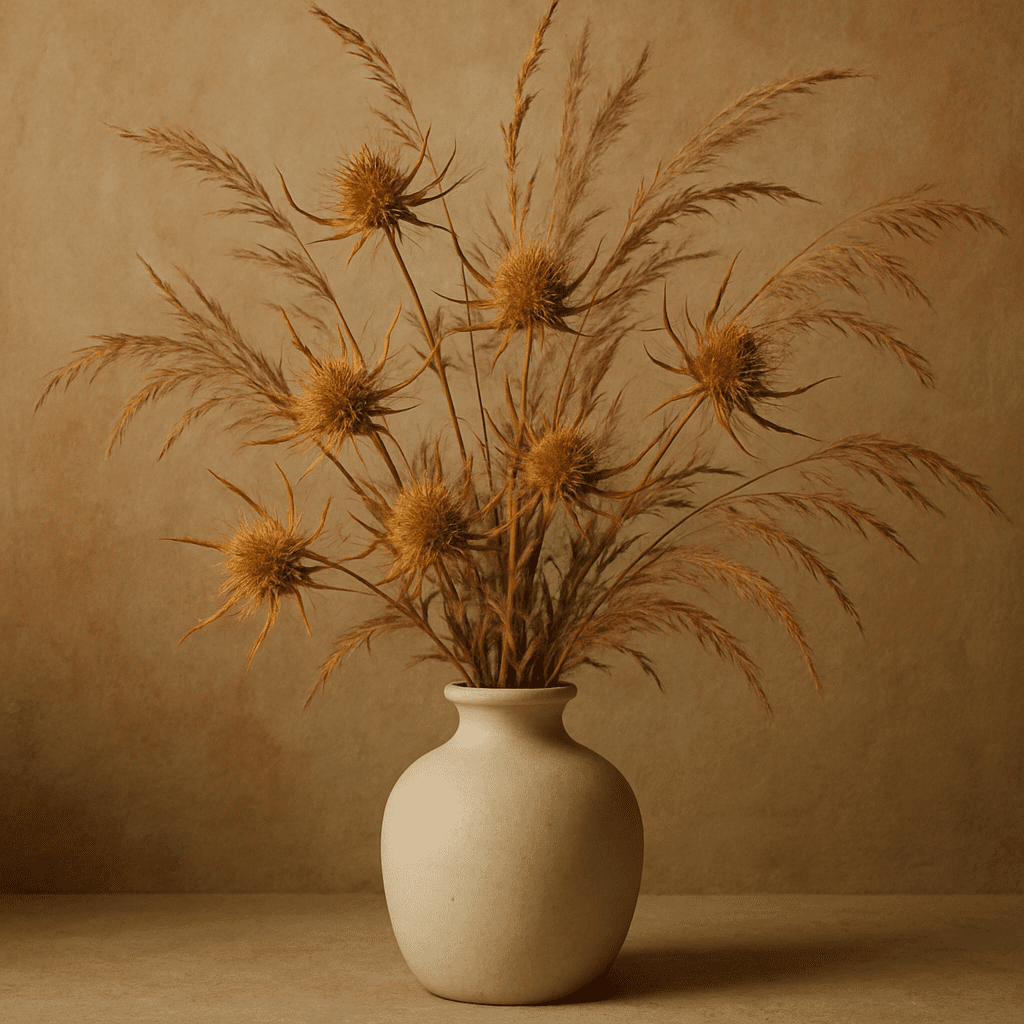
Even when summer ends, this beauty doesn't have to fade. Drying Alpine Sea Holly for floral arrangements is amazingly simple: cut the stems when in full bloom and hang them upside down in a dark place.
From the Summit to the Garden: Your Personal Plan for a Lasting Blue
If your Alpine Eryngium isn't flowering, the cause is usually too much care. These low-maintenance mountain plants thrive in harsh conditions and only need three simple things: plenty of sunshine, lean soil, and absolute peace. If they receive rich, nitrogen-heavy fertilizers, they produce a jungle of green leaves but completely forget to form their characteristic metallic blue collars. Simply take a step back, refrain from fertilizing, and let the sparse soil work its magic.
Here's how to transform a challenging, sun-drenched patch of earth into a true stage for the queen of the Alps. As an extremely hardy ornamental plant, your Eryngium alpinum will faithfully return year after year, anchoring your garden design with its ice-blue architecture. Choose the sunniest, driest spot in your garden and enjoy the effortless reward of bringing wild mountain romance right to your doorstep.