
The Properties and Uses of American Yellowwood
Imagine a tree that hides a living secret: beneath its smooth, silver bark lies heartwood that glows as bright as a ripe lemon. Historical records show that early pioneers used the American Yellowwood especially valued for the extraction of brilliant yellow dyes.
Finding a shady canopy that doesn't overwhelm the garden is a common challenge. Botanically known as American yellowwood Cladrastis lutea Correct American Yellowwood) known, this slow-growing beauty solves precisely this landscape dilemma.
In practice, designers consider the maple tree a spectacular alternative to the often overused ones. It serves flawlessly as White flowering ornamental tree for the home garden and transforms ordinary lawns into stunning, low-maintenance floral showpieces.
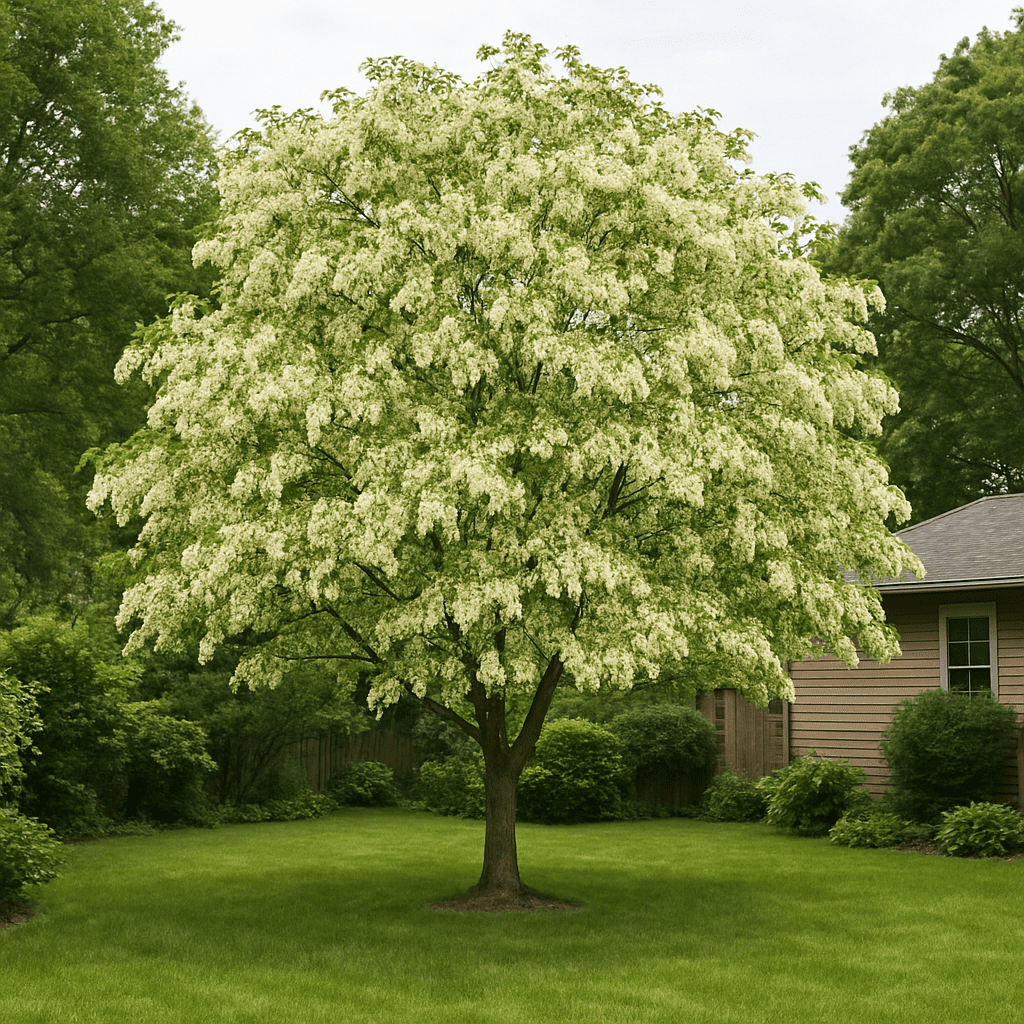
From Lemonwood to Beech Bark: The Profile of Cladrastis kentukea
A fresh cut of the wood reveals the fascinating properties of the yellow heartwood, which in the past served pioneers as a natural dye for fabrics.
On the outside, the trunk, on the other hand, presents itself wonderfully simple and calming. Anyone who knows the smooth gray bark of the beech will immediately appreciate this strokeably soft texture, which offers an elegant, bright eye-catcher, especially in the otherwise bare winter garden.
Visually, the pinnate leaves are initially reminiscent of widespread street trees. However, a direct comparison between Cladrastis kentukea and Robinia pseudoacacia (the well-known Black Locust) reveals a clear winner for the front yard: Our Yellowwood is completely thornless, does not form aggressive root suckers, and grows much more calmly.
A concise Cladrastis kentukea fact sheet illustrates how well the tree fits into our gardens:
- Final size 10 to 15 meters (perfect size for a yard tree)
- Growth Slow to moderate
- Comfort zone Loves loose, well-draining soils without waterlogging
Once the tree has established itself in its place, it prepares for a very special spectacle.
The Magic of the White Cascades: Why Yellowwood Blooms Like a Battery
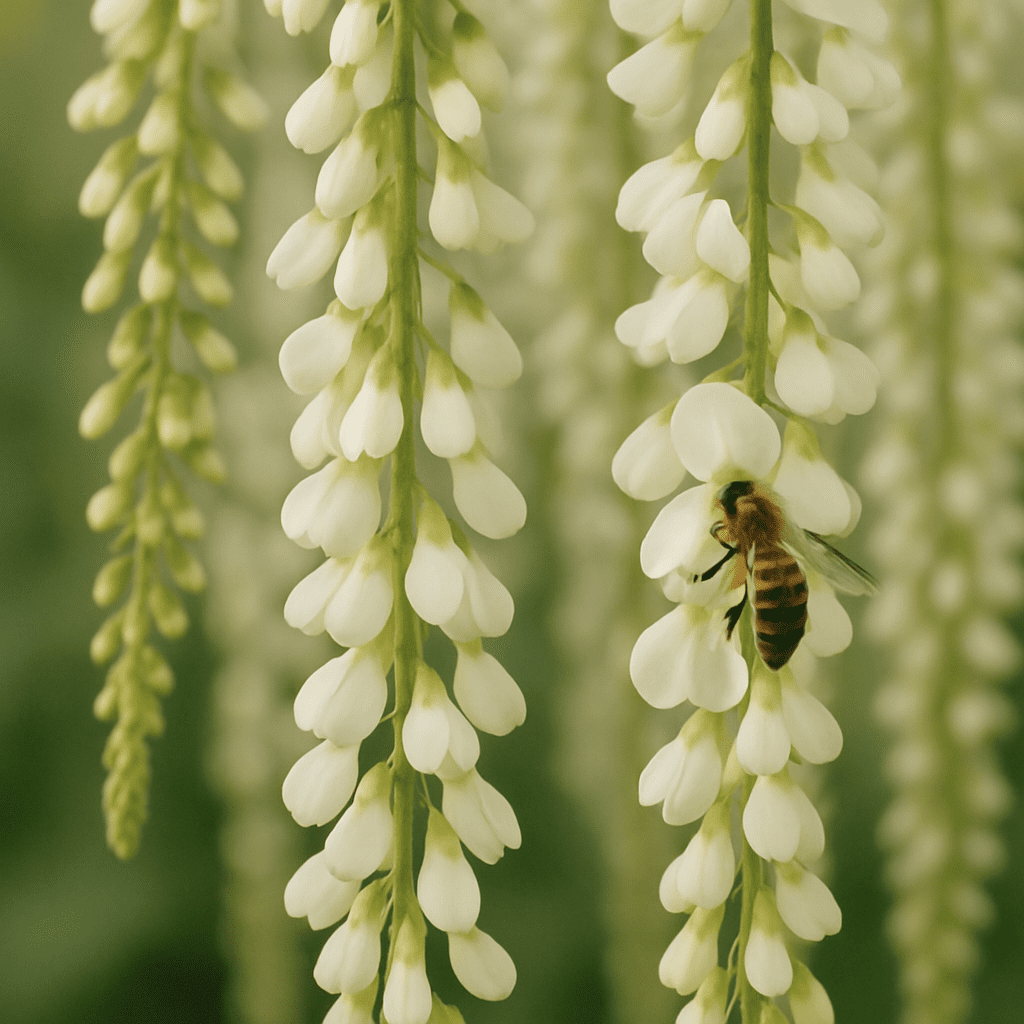
Patience is required when garden owners ponder: When does the Virgilius tree actually bloom? It usually takes about ten years until this charming tree first presents its hanging, up to thirty-centimeter-long flower clusters – the so-called panicles.
As a true role model for bee-friendly trees with white panicles, it then follows a fascinating rhythm. The tree functions like a battery that needs to be recharged: it collects energy for two to three years before producing masses of fragrant butterfly-like flowers in early summer, whose subtle vanilla aroma fills the entire garden and magically attracts insects.
As the warm blooming months end, the next visual spectacle is already announced. The canopy ushers in a brilliant golden-yellow autumn coloration in deciduous trees, which makes the end of the gardening season shine brightly for weeks on end.
Deep within the earth during these colorful seasons, another extremely practical advantage for your garden design lies hidden.
A deep-rooted plant for climate change: Why everything grows under this tree
Anyone who has ever tried to plant grass or flowers under a shallow-rooted tree knows the frustrating struggle for every drop of water. The Yellowwood elegantly solves this space problem because it is a true deep-rooting tree for climate-resilient gardens. Instead of greedily spreading just below the surface, it sends its roots straight down into the soil, allowing you to easily plant ground cover or spring flowers right up to the trunk.
This invisible architecture in the ground also perfectly meets the site requirements and frost hardiness of ornamental shrubs during hot, dry summers. The deep root system offers small and urban gardens three crucial advantages:
- Drought resistance: The tree taps into deep water reserves when the topsoil is long since bone dry.
- Harmonious Neighborhood: Companion plants do not have to compete with the dominant tree for nutrients.
- Storm resistance The massive anchoring also gives the trunk an extremely secure hold even in strong winds.
Once you've found the perfect spot, consider growth rate and ultimate height when planning. Solitary tree: Although the shrub grows rather slowly at first, it develops a majestic, spreading crown in old age. This shape requires some support during its formative years.
Tree care without ‚bloodshed‘: The right cut for stable crowns
A spring pruning of this shrub is like a turned-on faucet. The yellowwood builds up enormous sap pressure in late winter, which is why tree care and pruning of bleeding species must be done in late summer. Pruning too early leads to heavy „bleeding,“ which unnecessarily weakens the tree and opens wounds.
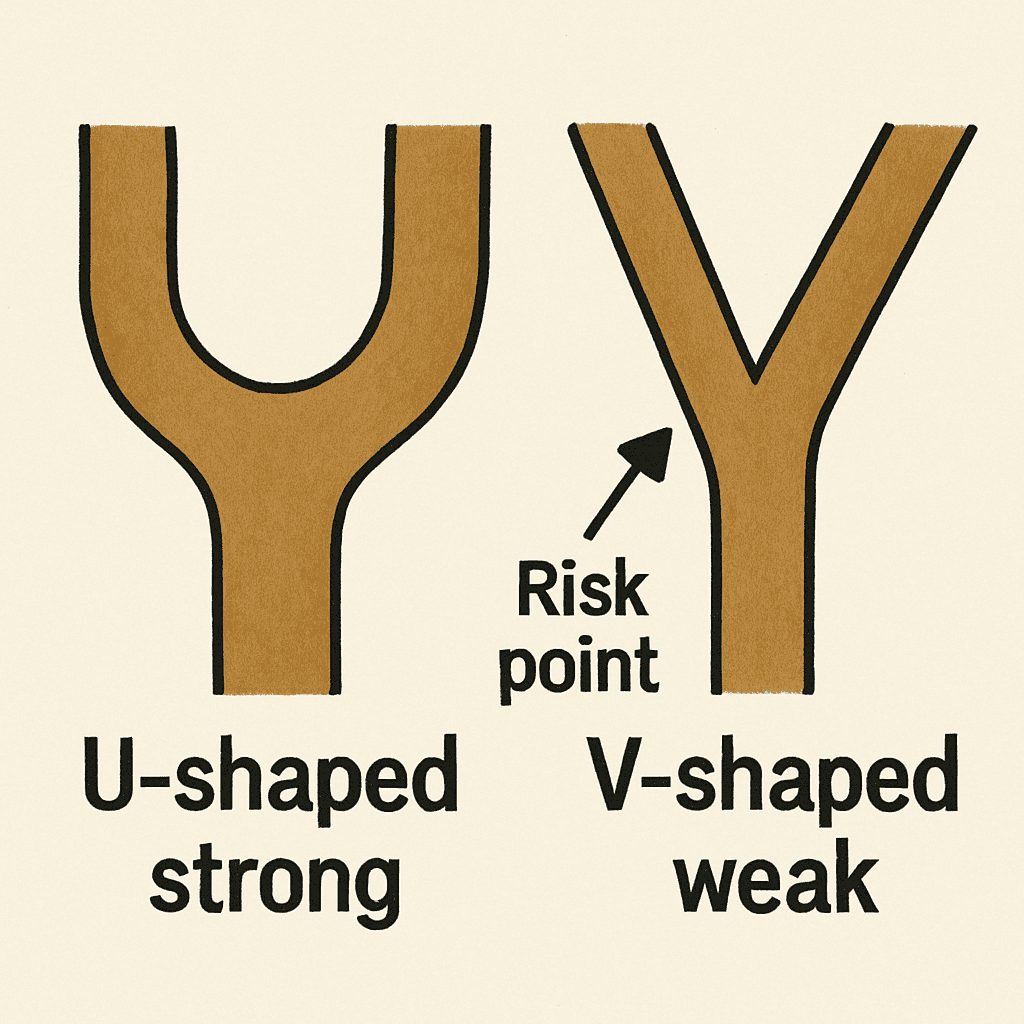
Closely inspect young branch forks to prevent later storm damage. Strong attachments grow in a wide „U“ shape, while narrow „V“ shapes act like a vulnerable hinge. Here's how to do it right:
- Time Only prune during dry late summer (August/September).
- Structure Remove weak V-shaped branches early from the trunk.
- Tool Only use sharp, disinfected scissors.
Patience pays off, as the slow growth saves you costly maintenance efforts in the long run. Many garden owners initially ask frustratedly: Why doesn't the tree bloom? It's quite simple: it invests its energy completely in building this stable crown architecture before opulent flowering even begins.
Once this foundation is in place, the woody plant is wonderfully easy to care for. Those who implement solid instructions for planting and fertilizing deciduous trees early on ensure healthy growth all around.
Your Path to Yellowwood Happiness: The Checklist for Planting and Enjoying
The American yellowwood is the ideal choice for patient gardeners seeking a distinctive, insect-friendly shade tree that won't overcrowd the garden.
A quick site check before planting ensures that the chosen location offers sufficient sun and well-drained soil. Looking at American yellowwood pictures can help you visualize the brilliant spring blossoms and golden autumn foliage in your own garden.
Planting a Yellowwood as a striking specimen tree is a rewarding decision. The tree not only provides shade but is a sustainable addition to garden design that brings joy through its extraordinary appearance for many years.