
Care and Properties of the London Planetree
When strolling through stately parks or historic avenues, one majestic tree often immediately catches the eye: the London plane (London planetreeWith its sprawling, shade-providing crown and robust growth, it shapes the urban landscape like hardly any other tree. But this giant among deciduous trees also offers fascinating possibilities for private property owners – provided one knows its special needs.
In this post, you'll learn everything you need to know about the characteristics, ideal location, and proper care of this fascinating tree.

What makes the London plane tree so special?
The London plane is a natural hybrid of the American sycamore and the Oriental plane. Through this combination, it combines the best characteristics of both parents: enormous growth vigor, longevity, and exceptional resistance to environmental influences.
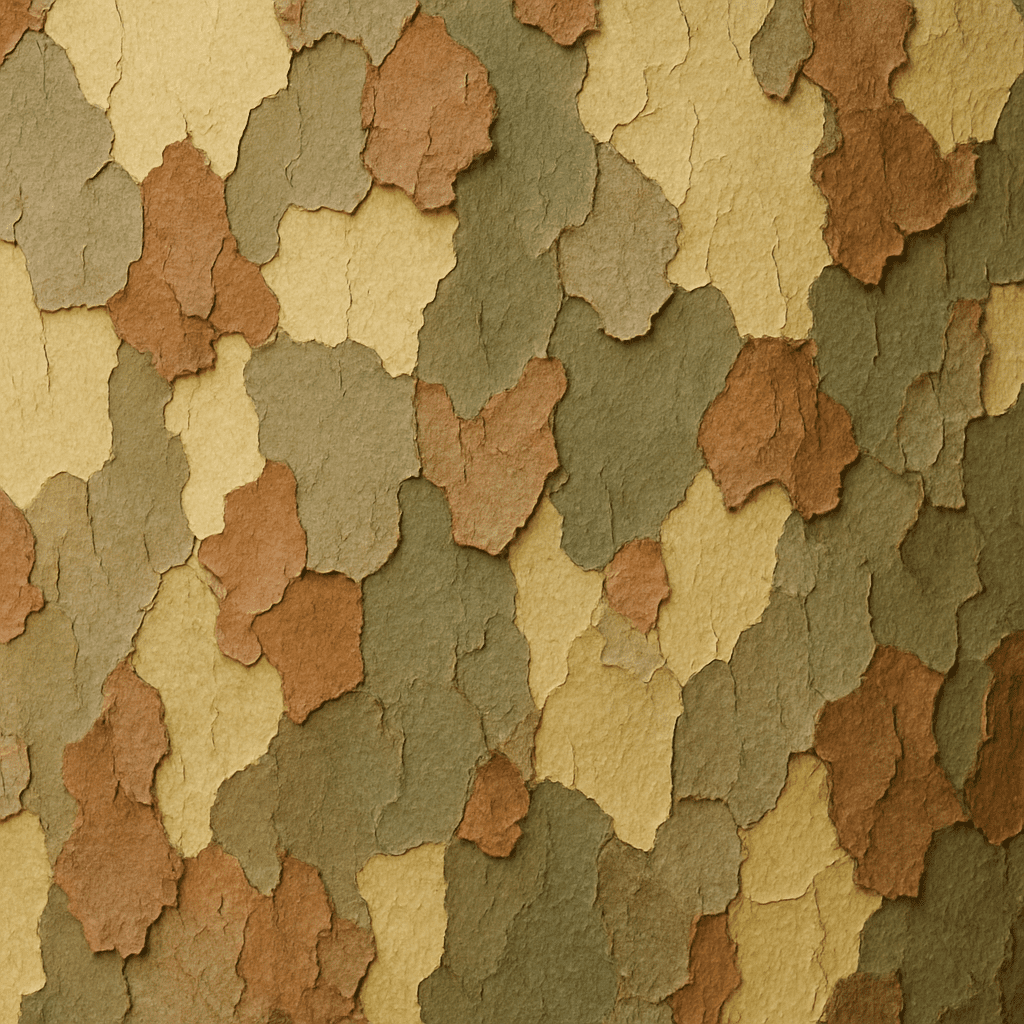
Many nature lovers often ask themselves the same question when looking at the imposing trunk: Why is the bark peeling off? This phenomenon is a completely natural process and one of the tree's most distinctive characteristics. Since the bark of the plane tree does not grow with the trunk's thickening, unlike other trees, it tears open and falls off in large, irregular plates. Beneath it, a fascinating mosaic of yellow-green to light bark is revealed.
Another characteristic feature is the sycamore fig. In autumn, small, spherical, spiky-looking fruit clusters form, hanging from branches on long stems, and often remaining on the tree throughout the winter.
Risk of confusion: Difference between plane tree and maple
At first glance, the leaves of the plane tree look strikingly similar to those of the maple. But the Difference between Plane tree and Maple is easily recognizable if you pay attention to the details:
- Leaf position: With maple trees, leaves on the branch are directly opposite each other (opposite phyllotaxis). With plane trees, they are arranged alternately (alternate phyllotaxis).
- Fruits: The maple forms the well-known „propeller fruits“ (schizocarps), while the plane tree bears spherical fruit clusters.
- Yield The flat, peeling bark is a distinguishing feature of the plane tree.
If you draw a direct comparison Plane tree vs. Field maple Remarkably, the immense size difference also becomes apparent. While the native field maple usually grows more like a shrub or a medium-sized tree, the plane tree develops into a true giant, reaching up to 30 meters in height.
Location and Planting: The Plane Tree in the Garden
Whoever has Plane tree in the garden If you want to plant it, you should be aware of the dimensions of this tree. It is an excellent Shade tree for large gardens, requires a lot of space to develop healthily.
The ideal location and soil condition
The plane tree is extremely adaptable and has low demands on soil type. This also explains the typical Site requirements for park treesThey must be able to thrive on a wide variety of surfaces. A great advantage of London planetree is its remarkable Resistance to soil compaction, making it a perfect tree for high-traffic areas. It also excels as a Urban tree climate change resistance It tolerates heat, drought, and urban pollution excellently.
The question arises of the Root system: Deep-rooted or shallow-rooted? The plane tree typically forms a strong heart root system. This means its roots spread both in depth and widely.
Calculate intervals correctly
Because of its expansive root system and mighty crown, it is absolutely essential to have sufficient Maintain planting distance from buildings to be able to. Experts recommend a minimum distance of 8 to 10 meters from house walls, fences, or paved driveways to avoid later damage to foundations or lifted pavement.
Platanus x hispanica Care Guide: Compact and Practical
Although the tree is considered very robust, proper care ensures vital growth and minimizes the risk of diseases. Here is a concise Platanus x hispanica Care Instructions For garden owners.
Pruning: Knowing when and how
Regular pruning is not strictly necessary if there is enough space, but it is often done to shape the plane tree into a „tree with a canopy“ or a „pollarded tree“. However when to prune a plane treeThe optimal time is late winter (January to February), when the tree is still dormant and no more severe frosts are expected.
Caution, health risk: When pruning in spring or summer, problems can arise. The young leaves and shoots are covered with fine stellate hairs, which fall off upon touch. These can cause severe Skin irritation caused by plane tree dust (also called „plane tree cough“) and can cause irritation of the respiratory tract. Therefore, be sure to wear protective clothing and a breathing mask when working in the tree canopy!
Autumn, time to rake: Where to put the leaves?
In autumn, the leaves glow in warm shades of yellow and brown. The combination of Autumn coloring and leaf removal However, this often presents a small challenge for garden owners. Plane tree leaves decompose extremely slowly due to their high tannin content.
Practice tip: Shred the leaves together with the grass clippings before putting them in the compost. Alternatively, once shredded, they work well as a protective mulch layer under hedges.

Keeping an eye on typical diseases and pests
Despite their robustness, there are specific pathogens and pests that can harm plane trees. Recognizing the signs early can prevent greater damage.
The Massaria fungus
A disease that has occurred more frequently in recent years is caused by the Massaria fungus (Splanchnonema platani) triggered. This mostly affects older branches in the upper crown area and leads to extremely rapid wood decay.
Do you want Treat Massaria fungus symptoms, you must act quickly:
- Recognizing symptoms: Look for pink to black, sooty discoloration on the top of the branches. Infested branches often break off suddenly.
- Treatment Chemical control is not currently possible. The only measure is to have infested branches removed generously and professionally by a tree care specialist to ensure traffic safety (danger from falling branches).
The plane tree lace bug
A frequent visitor on the leaves is the sycamore lace bug. It feeds on the undersides of leaves, leading to unsightly, whitish-yellow speckling of the leaves. In late summer, affected leaves often fall prematurely.
Do you want the Successfully combat the sycamore aphid, For young trees in the garden, simply spraying with a strong jet of water or using gentle preparations based on neem oil is often sufficient. For large trees, control is neither practical nor absolutely necessary, as the tree may suffer visually from the infestation, but its substance is usually not weakened to a life-threatening degree.
Conclusion: A robust giant with character
The London plane tree is far more than just an ubiquitous city tree. With its peeling, multi-colored bark, decorative fruits, and stately crown, it's a real highlight for generously sized gardens. Those who give it the necessary space, respect distances to buildings, and pay attention to the charming plane tree dust during tree care will be rewarded with a long-lived, climate-resilient shade provider. Whether as an imposing solitary tree or as an architecturally shaped umbrella-shaped plane tree, it brings a touch of majestic park flair right to your doorstep.