
The Significance of the Baobab Tree in Africa
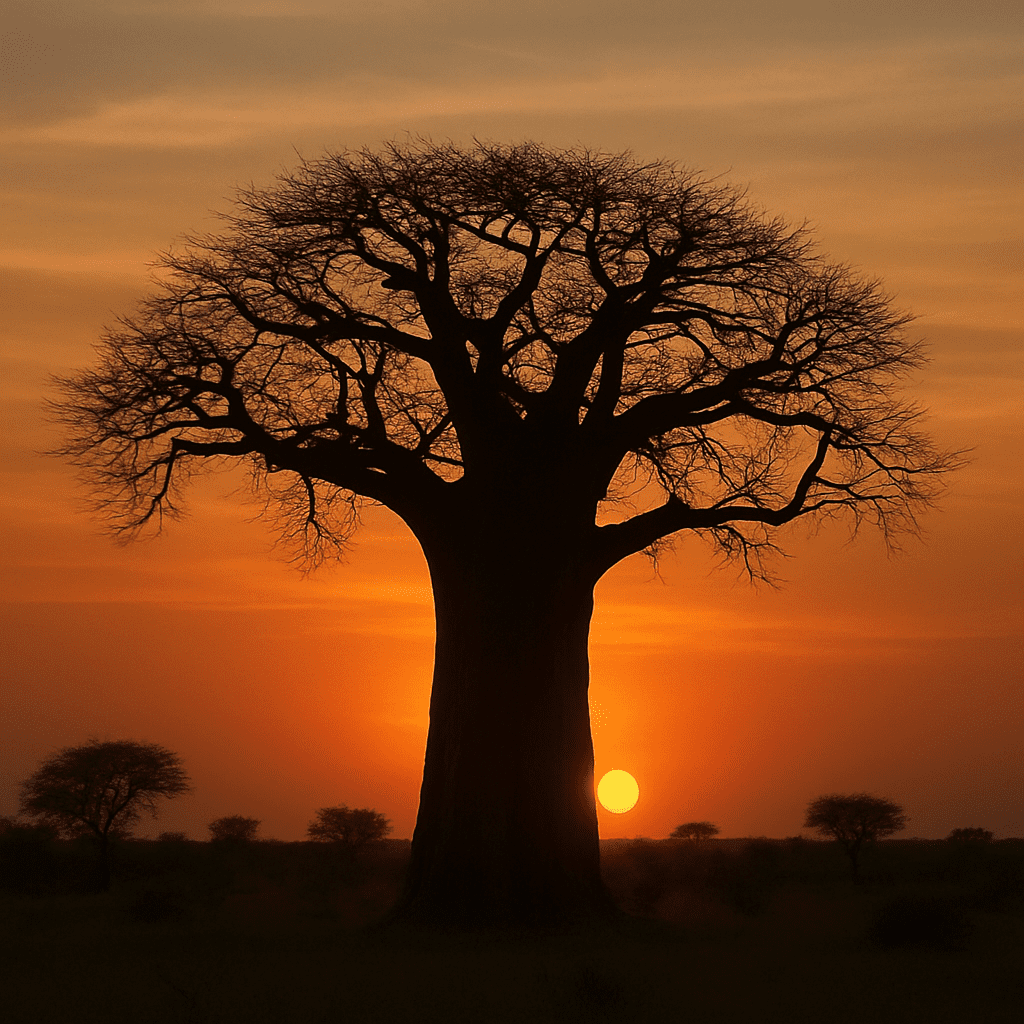
Imagine a tree whose trunk is as massive as a double garage and whose branches reach out to the sky like bare roots pleading for help. This fascinating sight belongs to the African baobab tree, which often appears as if a giant has uprooted it and stuck it back into the earth upside down. It not only shapes the endless landscape visually but also stubbornly survives in places where other plants have long since withered.
How does this giant achieve its survival miracle in the bone-dry savanna? The secret lies in a phenomenon called succulence in trees. You can basically imagine the baobab as a giant aloe vera on your windowsill, just on a massive scale. Its soft, corky wood absorbs tens of thousands of liters of water like a sponge during the short rainy season, storing these reserves safely for months of drought.
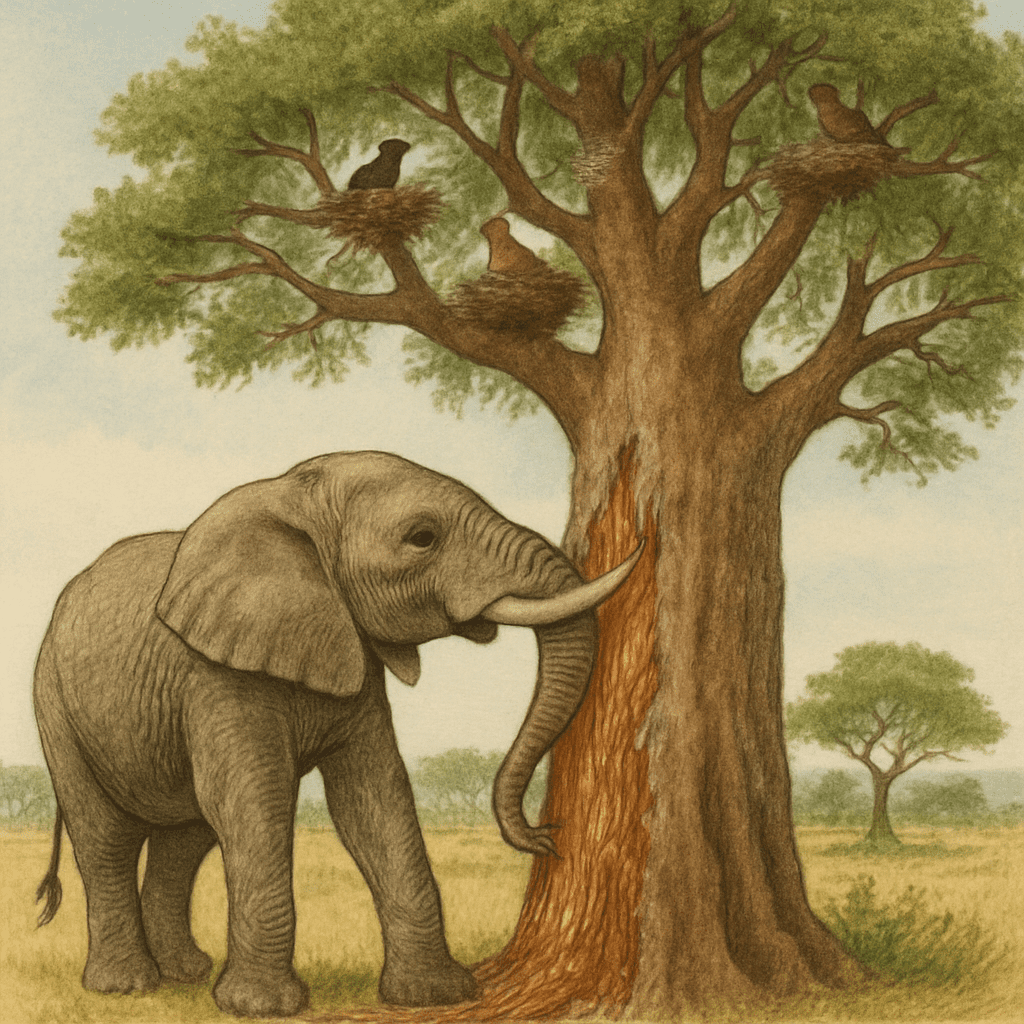
Thanks to these built-in water tanks, the plant provides essential ecosystem services because it functions in the wild like a densely populated high-rise building. Various „floors“ offer shelter and food to a wide range of inhabitants: birds nest in the tree hollows, bats feed on the large white flowers, and elephants chew on the moist bark in times of need. According to ecological studies, entire local networks collapse when this green anchor is missing.
It's no wonder, then, that the oft-cited meaning „Tree of Life in Africa“ is not a legend, but a tangible reality. From the vitamin-rich fruit to the extremely resilient bark, almost every part is utilized. When you consider the unique Baobab Features – so the scientific name of the tree – more precisely, a spectacular mix of botanical wonder and ancient pharmacy is revealed.
Adansonia digitata Characteristics: Why the ‚upside-down tree‘ is actually a giant sponge
Unlike ordinary trees with hard, solid wood, the baobab functions completely differently: it is basically a gigantic sponge. To survive the months-long dry seasons of the African savanna, it has developed a special water-storing tissue inside. Botanists call this extremely thickened growth form „pachycaul“ – a flexible trunk that literally expands like a balloon when it rains. This allows the trunk's water storage capacity to reach an incredible 100,000 liters.
A closer look at this architecture also clarifies the difference between the baobab and the bottle tree, with which it is occasionally confused. The true Baobab Features are masterful, highly specialized adaptations to extremes:
- Spongy wood Porous cells soak up every drop of rainwater.
- Thick-caudate trunk The barrel shape safely withstands the immense water pressure inside.
- Regenerative Bark She is fire-resistant and even heals deep wounds from elephant bites at a furious speed.
- Bare time For months, the tree sheds its leaves, photosynthesis pauses, and thus stops life-threatening water evaporation.
Especially this robust, shiny outer skin effectively protects the moist core from the scorching sun. However, since the tree's fibrous interior is more reminiscent of the tissue of a juicy carrot than solid oak, it lacks a typical characteristic: it doesn't form classic annual rings, which long presented researchers with a seemingly unsolvable puzzle when determining its age.
2,000 Years of Contemporary History: How to Determine the Biblical Age of a Baobab Tree Without Tree Rings
To decipher the age of these fascinating giants, scientists must tap into the treasure trove of archaeology. The saving grace for determining the age of baobab trees lies in radiocarbon dating (C14). Since the spongy tissue of the trunk doesn't form reliable annual growth rings, researchers take tiny wood samples and measure the decay of the carbon within – just like dating dinosaur bones or ancient fossils.
During these investigations, botanists encountered another astonishing phenomenon: natural trunk hollowing. As an African baobab tree ages, the innermost, oldest wood often dies off and decays, while the sturdy outer layers continue to grow vigorously. Over centuries, the tree thus transforms into a gigantic, living cylinder, the hollow of which can become so vast that a complete living room would fit inside.
Thanks to C14 analyses like these, it is now irrefutably established that some of these prehistoric survivors are well over 2,000 years old. Their enormous longevity and the massive, protective caves in their trunk make them the most important real estate in the wilderness. They act like multi-story biotopes, seamlessly illustrating why elephants and bats would simply be lost in the savanna ecosystem without the baobab.
The Savanna Ecosystem: Why Elephants and Bats Would Be Lost Without the Baobab
During the extreme dry season, the African tree acts as a central meeting point for the wilderness. The savanna ecosystem and the baobab then form an inseparable, vital unit. When all regular waterholes have long since evaporated, thirsty elephants scent the thousands of liters of moisture within the spongy wood of the massive trunk. With their powerful tusks, they rip off fibrous pieces of bark and chew on them like wet sponges – a brutal but life-saving trick that the tree surprisingly endures well thanks to its enormous regenerative power.
As soon as the sun sets, a truly magical spectacle unfolds in the treetops. Within minutes, hand-sized white blossoms open, emitting an intensely sour fragrance and immediately attracting hundreds of fruit bats. Botanists refer to this specialized bat pollination as „chiropterophily.“ It's a brilliant trade-off in nature: the nocturnal animals drink the nutritious nectar and, in return, carry the vital pollen to the next giant.
The numerous levels of this natural habitat are therefore permanently inhabited. The most important inhabitants include:
- Fruit bats (Pollination)
- Elephants (water source)
- Bees (Nesting sites)
- Birds
What ensures the survival of the animal kingdom eventually produces pods whose nutrient density makes them true marvels and real vitamin C bombs of the savannah for us humans.
Baobab Powder Ingredients and Effects: Discover the Vitamin C Bomb from the Savanna
After the impressive spectacle of pollination, velvety pods mature on the branch. Here, the tree uses a brilliant trick: natural fruit drying. The inside, under intense heat, even extracts its own moisture, so that the pulp ripens into a dry, chalk-like powder while still on the tree. The health benefits of the pulp are preserved in extremely highly concentrated form through this gentle process.
A look at the ingredients and effects of baobab powder reveals why the fruit is valued worldwide as a superfood. In addition to its considerable vitamin C content, the powder provides plenty of antioxidants. These act like tiny, cellular bodyguards that protect our bodies from harmful environmental influences. A direct nutrient comparison per 100g illustrates this power of nature:
- Vitamin C: Six times more than in oranges
- Calcium: Twice as much as in milk
- Dietary Fiber: A Sensational 50 Percent
For modern everyday life, this exotic ingredient is wonderfully uncomplicated. Just one to two teaspoons of the citrusy powder in your morning smoothie, water, or yogurt are enough for a natural nutrient boost for your immune system and digestion. But the African giant not only nourishes and heals us from within; the bark and seeds also hold extraordinary properties for skin care and traditional medicine.
Baobab Oil for Skin Care and Traditional Medicine: What the Bark and Seeds Can Really Do
While the fruit powder enriches our diet, the tree is considered a gigantic open-air pharmacy in ethnomedicine – the traditional healing practices of indigenous peoples. The bark, in particular, is potent. African healers boil it to create soothing decoctions for fever or pain. This traditional medicine from the bark cleverly utilizes plant-based defense compounds, which actually protect the trunk from the extreme savanna sun, for human recovery.
Another hidden treasure is made from the fruit seeds, from which a golden-yellow elixir is pressed. This oil is bursting with essential fatty acids. Imagine these building blocks like fine mortar that repairs the invisible protective wall of your skin and locks in important moisture. This is precisely why the topical application of baobab oil is becoming increasingly popular in skincare today: it absorbs rapidly and makes even extremely dry areas feel silky soft again without feeling greasy.
Just three to four drops are enough to soothe redness or enhance your daily facial cream. The tree thus gifts us pure life energy from bark to core. Those fascinated by this majestic survivor don't necessarily have to go on safari; they can even bring the African giant into their own home as a houseplant on their windowsill.
Keeping a Baobab as a Houseplant: How to Bring the African Giant to Your Windowsill
Bring an African giant into your living room? You can: You can actually keep a baobab as a houseplant. For the savanna tree to thrive, it needs plenty of sunlight, preferably in a south-facing window. In the first few months, the small tree grows surprisingly quickly in height before it puts its energy into the typically thick trunk – your own little desert in a pot.
However, the biggest hurdle for home gardeners lies right at the beginning. In nature, the stone-hard protected seeds are usually only cracked by the stomach acid of elephants. If you want to germinate baobab seeds, this process must be imitated through so-called scarification (scoring the shell):
- Filing the shell: Gently nick the seed with a file until a lighter layer is visible.
- Soak in warm water: Let the seeds soak in lukewarm water for 24 hours to plump up.
- Use seed starting mix Plant the seed about one centimeter deep in loose, sandy substrate.
- Patience Warm the pot (ideally to 77 degrees Fahrenheit). After two to six weeks, the first signs of life will appear.
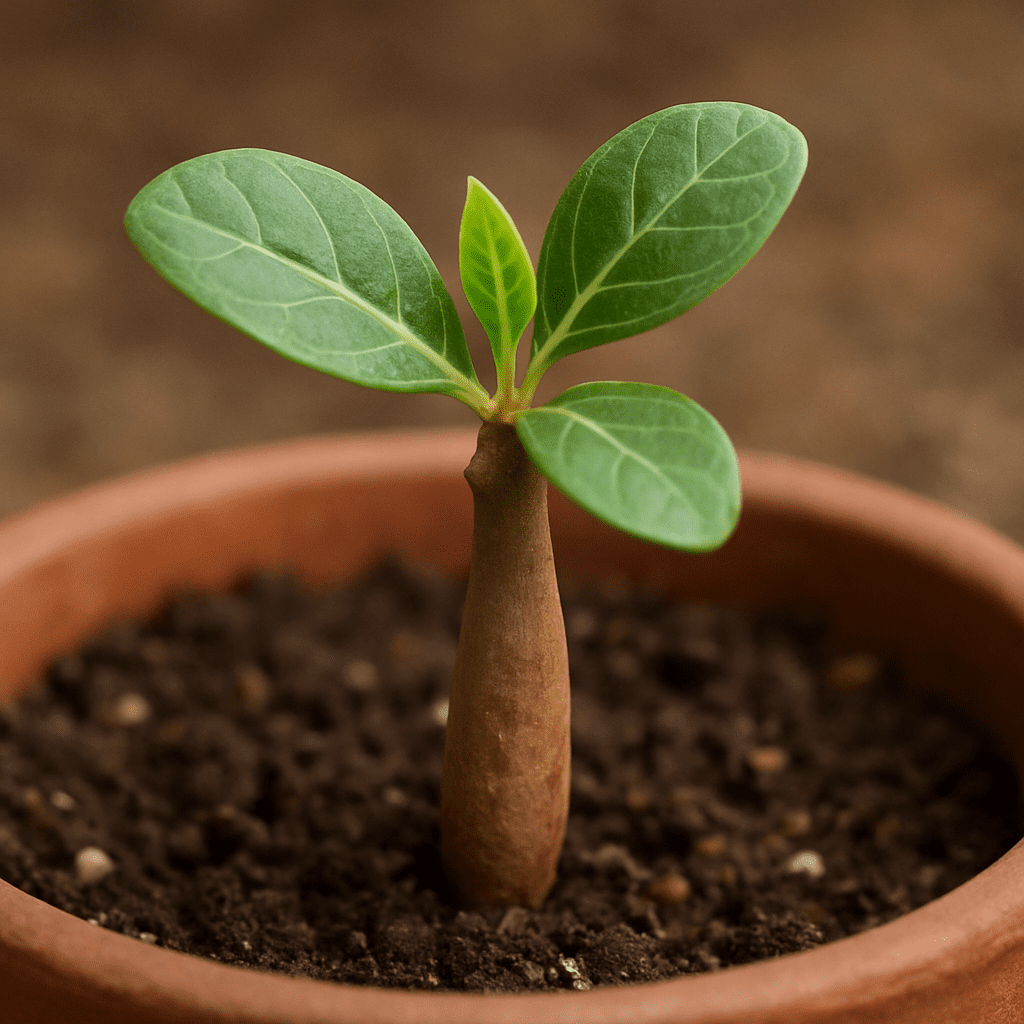
As soon as the first tender foliage peeks out of the earth, the real routine begins for this undemanding survivor. Since the tree stores moisture, a delicate touch is needed when adding water to avoid critical care mistakes.
Watering and fertilizing baobab trees correctly: Avoid the 3 critical mistakes in care
Anyone who wants to keep the African giant healthy must always remember its origin. To water and fertilize the baobab correctly, you must understand its storage system: its thick trunk is a massive water tank. Therefore, water it thoroughly once and then let the soil dry out completely. The crucial criterion for this is high substrate permeability – excess water must be able to drain away immediately, like through a sieve, otherwise the fine roots will suffocate.
If you ignore this desert logic, the plant quickly gets into mortal danger. Strictly avoid these three deadly sins when caring for baobab trees:
- Waterlogging Standing water causes rapid root rot, which you can quickly identify by a soft, spongy trunk.
- Too dark location: Without direct sun, the African succulent on the windowsill will wither.
- Fertilizing in dormancy: In winter, the tree often sheds its leaves and sleeps. During this natural resting phase, fertilizer and frequent watering are absolutely taboo!
Once the young plant sprouts again in spring, a cactus fertilizer low in lime, applied monthly, is sufficient. While small exotic plants grow up safely on a windowsill at home, their wild, millennia-old relatives are fighting for their future.
Endangered Giants: Why Africa's Oldest Baobab Trees Need Our Help Today
A tree that has survived every drought for 2,000 years is now simply threatening to die of thirst. This very drama is currently unfolding in the African savanna. The natural climate resilience of old trees – their ability to withstand extreme weather conditions without harm – is reaching its limits. Because the usual rainy and dry seasons are completely out of rhythm due to climate change, the gigantic water reservoirs in their trunks are no longer filling up in time to bridge the increasingly long periods of heat.
If an African baobab tree collapses under this stress, much more than just an imposing plant disappears. Tragic habitat loss occurs: because these trees function as vast, living ecosystems, countless birds, bats, and insects suddenly lose their homes and food sources. The silent death of these central hubs is a drastic alarm signal for all of nature.
Fortunately, scientists are already working feverishly on solutions. They are mapping remaining populations and developing targeted measures for the protection of endangered species. Adansonia-species, for example, by cultivating even more heat-resistant seedlings. However, the preservation of these giants is not solely in the hands of botanists. Everyone can make a valuable contribution and sustainably integrate this wonder of nature into everyday life.
Your Plan for Protection and Enjoyment: How to Sustainably Integrate the Baobab Tree into Your Daily Life
If one considers the „Tree of Life“ not just as a curious giant of the savanna, but as an ecological masterpiece and a nutritional wonder, this knowledge can be directly used to promote one's own health while simultaneously protecting desert ecosystems. A practical action plan:
- Buy certified organic products Support fair trade when purchasing baobab powder or oil.
- Share knowledge about ecosystems: Inform others about the ecological significance of these giants.
- Caring for a Zimmer's Baobab: Bring a piece of this resilient nature into your own home.
Conscious consumption strengthens local communities and preserves the habitat where the African baobab tree has thrived for millennia. The next time you hear of extreme droughts or inhospitable landscapes, remember the unwavering resilience of these prehistoric giants – an inspiring testament to nature's relentless bloom, even in the driest of places.