
Care and breeding of the Amaryllis Belladonna
Scarcely anything breaks through the dreariness of the grey winter as impressively as the giant, colorful bloom of an amaryllis. However, as experienced gardeners know, most of these spectacular plants mistakenly end up in household waste after they have finished blooming. Far from being a short-lived disposable product, it is a fascinating marvel of nature that can thrive for decades with proper care.
*Poinsettia pulcherrima* Hippeastrum. The essential difference to the Belladonna lily – the real South African amaryllis – lies in its origin, but in everyday language, the better-known name for our houseplant has long since established itself.
Simply imagine the thick brown bulb as a rechargeable battery. During the splendid flowering period, the plant expends an enormous amount of energy, which is why the inconspicuous care after flowering is crucial for next year's success. With the right support, it reliably replenishes its energy stores on your windowsill and provides you with a new spectacle of color every winter.
The ‚Thirds Trick‘: Planting Amaryllis Bulbs Correctly
Magnificent flowers often grow in seemingly too-small containers. If you How to correctly plant Hippeastrum bulbs, a tight pot is indeed your best friend. The lack of space signals to the plant that it should not invest its energy in root growth, but directly in flower formation. This is how to get the perfect start:
- Pot Choice: Choose a heavy pot that is no more than a thumb's width wider than the onion itself to prevent it from tipping over later.
- Earth Use a casual Substrate for bulbous plants, from which excess water can drain immediately.
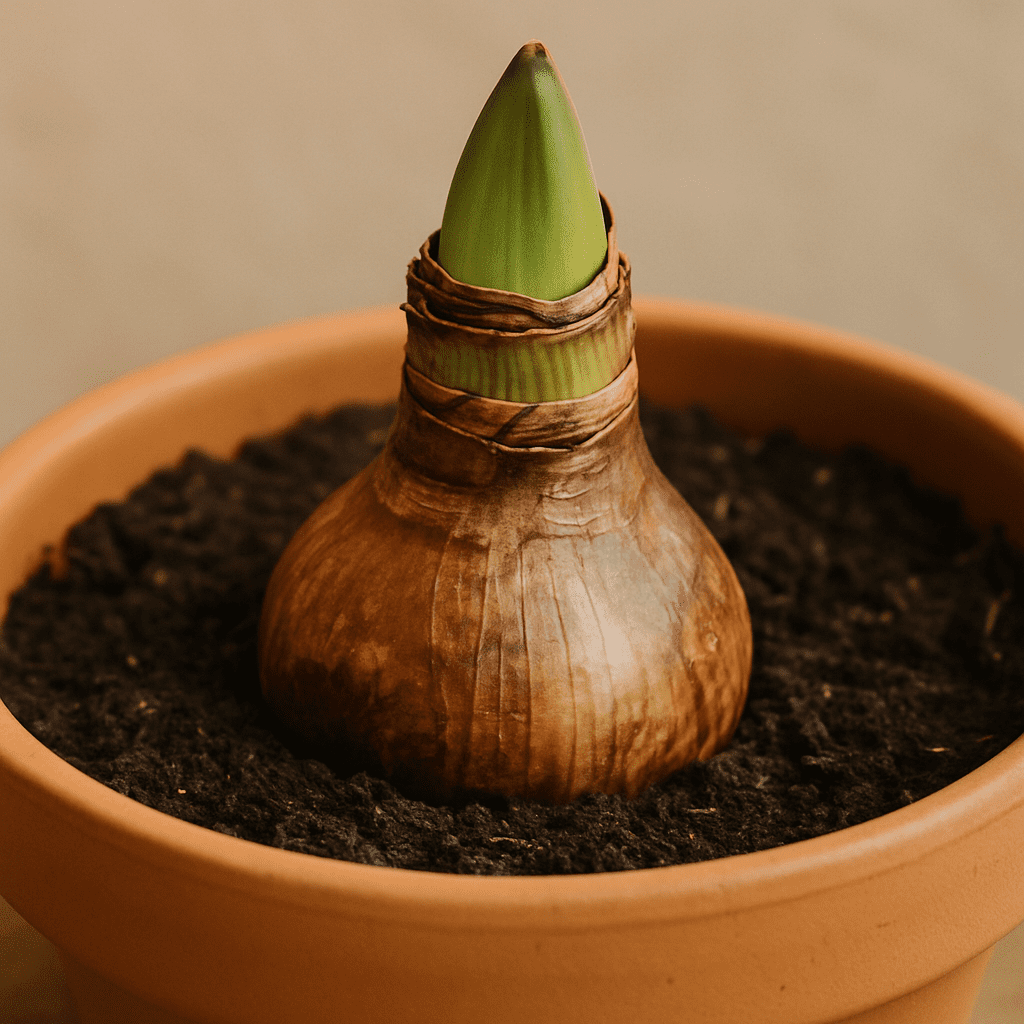
- The 1/3 Rule: Plant the onion so that only the top third is still sticking out of the ground.
- Watering Give a tiny sip of water to gently wake the roots from their winter sleep.
This exposed neck is the most important foundation for a successful Amaryllis care. If you bury the bulb completely, watering can water can easily accumulate in the fine layers of the neck and cause fatal rot. Imagine the potting soil simply as a warming scarf – it should be cozy, but never pulled over the nose and mouth.
Once your plant is safely settled in the pot using this „third trick,“ the wait for the first green sprout begins. To prevent it from becoming a wobbly tower later on, light and water requirements must be optimally balanced from the start.
Managing Light and Thirst: How to Prevent Unstable Stems and Waterlogging
When the first thick shoot becomes visible, a fascinating race towards the window begins. Amaryllis have an enormous drive for the sun, which is known in botany as phototropism – or simply „light-seeking.“ To Lack of light and unstable flower stalks To prevent this, you should rotate the pot a quarter turn every two to three days. This will ensure the stem grows straight upwards and doesn't later break under the massive weight of the large flower heads.
When watering, the tried-and-true motto „less is more“ applies during this rapid growth phase. Always water only at the very edge of the pot, or use the bottom-watering method via a saucer, instead of wetting the bulb from above. The potting soil should always feel like a well-wrung-out sponge, in order to Prevent waterlogging and root rot to be able to.
A charming exception are the onions, very popular around Christmas, wrapped in colorful foil. Whoever has such Growing wax onions without water has it particularly easy, as these specimens already bring their own pantry with them. The thick wax layer seals all necessary moisture inside, which is why a warm, bright spot in the living room is completely sufficient to bring the marvel to bloom.
Now enjoy weeks of floral spectacle, as your good preparation pays off. However, as soon as the last flower wilts, the invisible work for the following year begins, during which the plant regains its strength.
The ‚After‘: When to Cut Back Spent Stems and Start the Power Treatment
Every floral splendor eventually comes to an end. To the Extend vase life To be able to or to enjoy the potted plant longer, a cooler location away from the heater at night helps. However, as soon as the majestic petals wilt like paper, the first and most important pruning is due.
The golden rule for the question, When to cut back faded stems This makes sense and is easy to remember: Cut off the drying flower head, including the thick, hollow stem, about three centimeters above the bulb. This simple step prevents the plant from expending its valuable energy on seed production, which is very demanding. Instead, the remaining energy is redirected purposefully. It is important to only remove the round stem – the flat, sword-shaped leaves must remain intact.
Exactly this green foliage will henceforth form the centerpiece of the Knight's star care. The leaves now work like little solar panels, capturing sunlight and charging the bulb like a battery for next year's bloom. For this underground energy store to be well-filled, the plant will soon welcome a change of location.
The Summer Residence: Nutrient Needs and Leaf Care During the Growing Season
If your Amaryllis Ritterstern now seemingly only producing green leaves, this is absolutely not a mistake. On the contrary: After the strenuous flowering, the plant is now entering its active growth phase. These often very long leaves work at full speed to store nutrients and recharge the bulb like a battery.
Once the frosty nights are over from mid-May, the plant will be happy to move outdoors. The ideal Location conditions for lush blooms The following year, they are found on the terrace or balcony outside. To the high Nutrient requirements during the growing season to cover optimally, this simple summer routine helps:
- Fertilizer Add conventional houseplant fertilizer to the watering solution weekly – this acts as a direct charging station for the bulb.
- Sun protection Choose a semi-shady spot, as the hot midday sun can burn the leaves.
- Pest Check: Check the leaves occasionally for snails or aphids, which could weaken this important green powerhouse.
By late summer, your plant will noticeably strengthen from its time outdoors. However, the bulb cannot indefinitely store this energy unused; it eventually needs a clear signal and a period of rest to form the next bud.

The 8-Week Sleep: Initiating the Dormancy Period After Flowering
After a long summer, the bulb is full of energy, but it will not bloom on its own again. To get the coveted Initiate dormancy phase after flowering To be able to do this, the plant now needs targeted environmental stress. This natural mechanism works like a reset button, prescribing the plant a much-needed pause before it prepares for its next big show.
The first concrete step for this autumnal hibernation begins as early as August. Completely stop watering and fertilizing from now on, which will cause the green foliage to slowly yellow and dry out. Only cut off these leaves when they are completely dry and brittle, as the bulb draws valuable residual nutrients from the foliage until the very end.
Once the dried foliage is removed, the plant needs a change of scenery. To Overwintering flower bulbs in pots A dark, cool cellar room with temperatures around 15 degrees Celsius is best suited for this. In this spartan environment, the soil remains bone dry, allowing the development of new flower buds to occur undisturbed inside the brown shell.
This strict timeout must last at least eight to ten weeks so that the Christmas blooming schedule It works out perfectly. Those who skip or ignore this rhythm often experience a bitter disappointment on their windowsill in winter when the plant refuses to cooperate.
Problem Solver: Why the plant is only producing leaves instead of flowers
It's frustrating when you wait for weeks and the plant only produces leaves instead of flowers. However, this phenomenon is not malicious intent, but usually a cry for help. In classic amaryllis care, the bulb acts like a battery: if it didn't get enough sunlight in the summer, it simply lacks the energy for the energy-consuming development of new buds.
However, a lack of energy isn't the only reason for a blooming strike. Often, the problem lies in skipping the fall dormancy. Here's quick diagnostic help for optimal amaryllis care:
| Symptom | Probable Cause | Solution for Next Year | | :— | :— | :— | | Only leaves are growing | No distinct rest period | Maintain 8 weeks of complete dryness in the fall | | Weak leaves | Lack of light in summer | Move the bulb to a significantly brighter location | | Bulb is shrinking | Nutrient deficiency | Fertilize consistently immediately after blooming |
If these errors are corrected, the floral battery will show itself fully recharged the following year. Sometimes a plant that has recovered so well will even produce small surprises that grow directly out of the ground next to the main shoot and can be ideal for propagation.
Own Offspring: Using Daughter Bulbs for Propagation
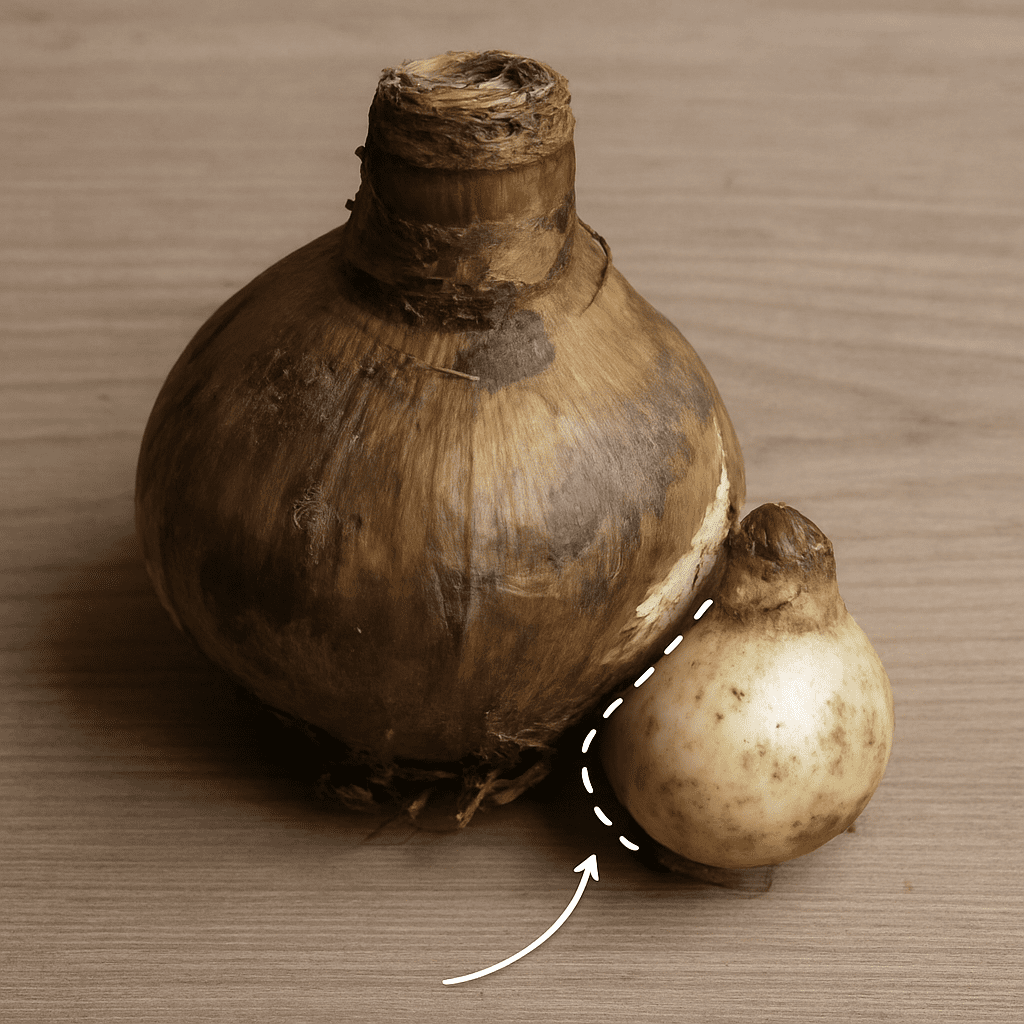
If you repot your plant after its dormancy period, you might discover small bulges at the base. These lateral appendages are a real gift if you want to use offsets for propagation. Simply separate the small offspring carefully from the main plant with a clean knife. The ideal moment for this cut arrives as soon as the „baby“ has already formed its first own roots.
To properly plant these young Hippeastrum bulbs, a small pot is sufficient at first, into which the plant is placed about two-thirds in the soil as usual. The care is exactly the same as for the mother plant, but it requires patience, as it usually takes three to four years for enough energy to be gathered for the first bloom.
Conclusion: Your roadmap for lifelong floral splendor
You no longer see the plant on your windowsill as a seasonal disposable item, but rather understand its natural rhythm. Successful amaryllis care follows a simple cycle: blooming is followed by green leaves, then a dormancy period. Your most important step for next year simply requires courage: stop watering completely in the fall so the bulb can rest.
Even without a green thumb, amaryllis care is effortless, as these bulbs are extremely forgiving. With conscious handling of the growth and resting phases, the plant grows into a long-lasting companion. With the right rhythm of light, water, and dryness, this fascinating winter bloomer will reward you with spectacular floral splendor year after year for decades.