
Imagine strolling through a lush French estate in 1897. Here stands the Old Rose ‚Baron Girod de l'Ain,‘ a true floral masterpiece among 19th-century French rose varieties. Historical records suggest Reverchon's rose creations brought a dramatically bold aesthetic to Victorian landscapes. Simply classified as an „Old Rose“—a cherished historical cultivar—its deep crimson petals are distinguished by serrated, frosty-white edges, making it an irresistible collector's item today.
The „Fringed“ Effect: How Frayed Petals and Intense Fragrance Distinguish This French Heirloom
Some flowers appear to be adorned with delicate lace. The rose owes this dramatic appearance to a botanical trait called fimbriation. Instead of smooth edges, this variety features serrated, frosty borders that resemble meticulous cuts made with pinking shears. These distinctive petals, with their thin white margins framing a striking wine-red center, make them an immediate focal point in any landscape.
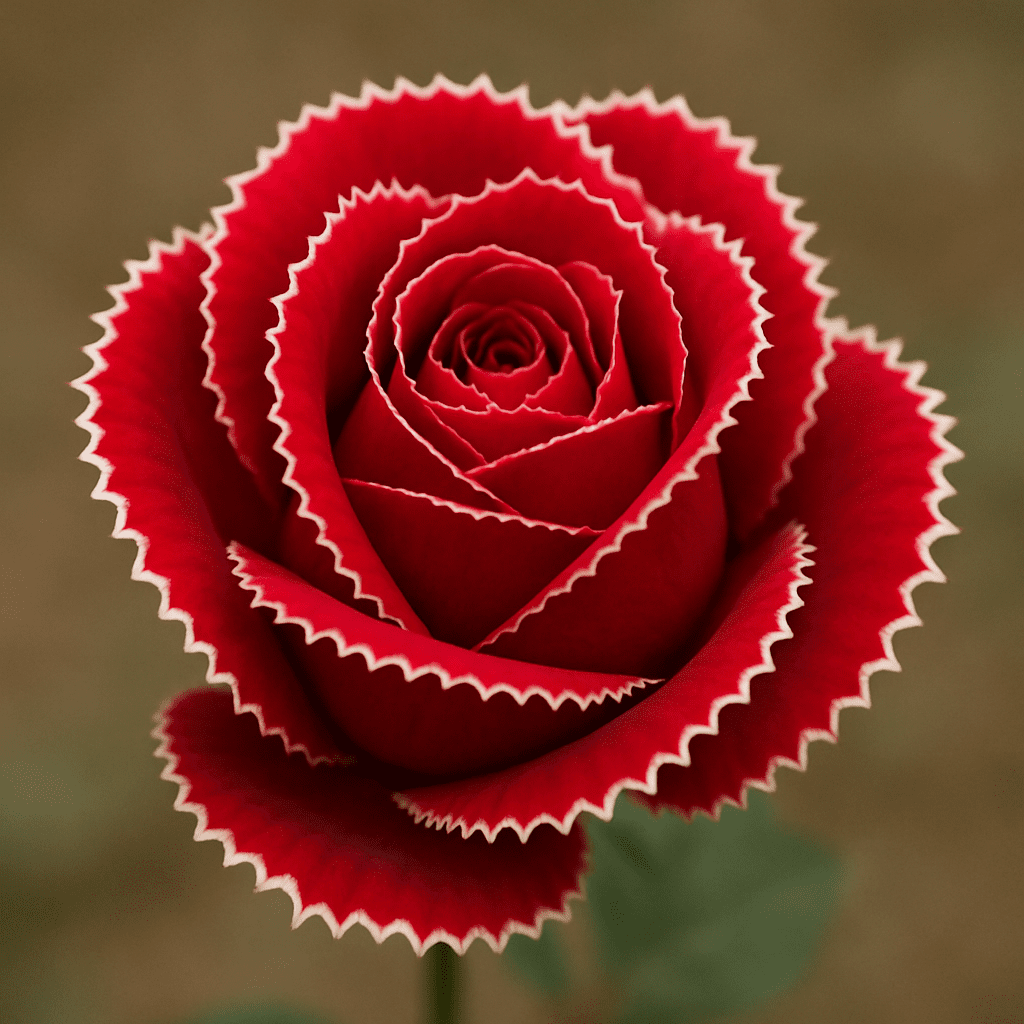
Its heavy, intoxicating fragrance immediately evokes memories of times gone by. Classified as a „repeating rose,“ this masterpiece from 1897 serves as an elegant familial bridge between old, summer-blooming shrubs and modern florist varieties. It captivates with the classic cupped bloom shape typical of old garden roses and exudes a rich Damask scent that sets the standard for highly fragrant, crimson garden roses.
Fortunately, this historical splendor isn't a one-season wonder. As repeat-blooming (remontant) roses, they reliably rebloom, providing multiple flushes of color throughout the season. To keep this 19th-century variety healthy, however, caring for ‚Baron Girod de l’Ain‘ requires proactive measures: managing black spot and proper pruning.
Preventive Care: Black Spot Management and Pruning for Continuous Blooms
A well-placed cut optimally supports the magnificent shrub. Position the pruners just above an „outward-facing eye“ – a small bud on the stem that points away from the plant. This directs new growth away from the center, creating an open, bowl-like shape that allows wind to pass through easily. Caring for remontant roses also includes providing nutrients. Fertilizing for repeat blooming requires applying a balanced fertilizer after the first bloom flush in spring and again in midsummer, rather than a single, large application in spring.
Despite a good pruning, black spot prevention remains essential. Even if you plant old roses in partial shade to protect the delicate petals from fading, this simple strategy helps against the leaf-spotting fungus:
- Distance Give the shrub ample space to ensure continuous air circulation.
- Morning watering: Water the soil only at dawn so that sunlight quickly dries any accidental water splashes on the leaves.
- Mulch cover Spread a thick layer over the roots to safely trap soil-borne fungal spores in the soil.
These care routines form the ideal foundation for successfully integrating historical roses into your own garden design.
Creating a Victorian Atmosphere: Garden Design with the Historic Rose
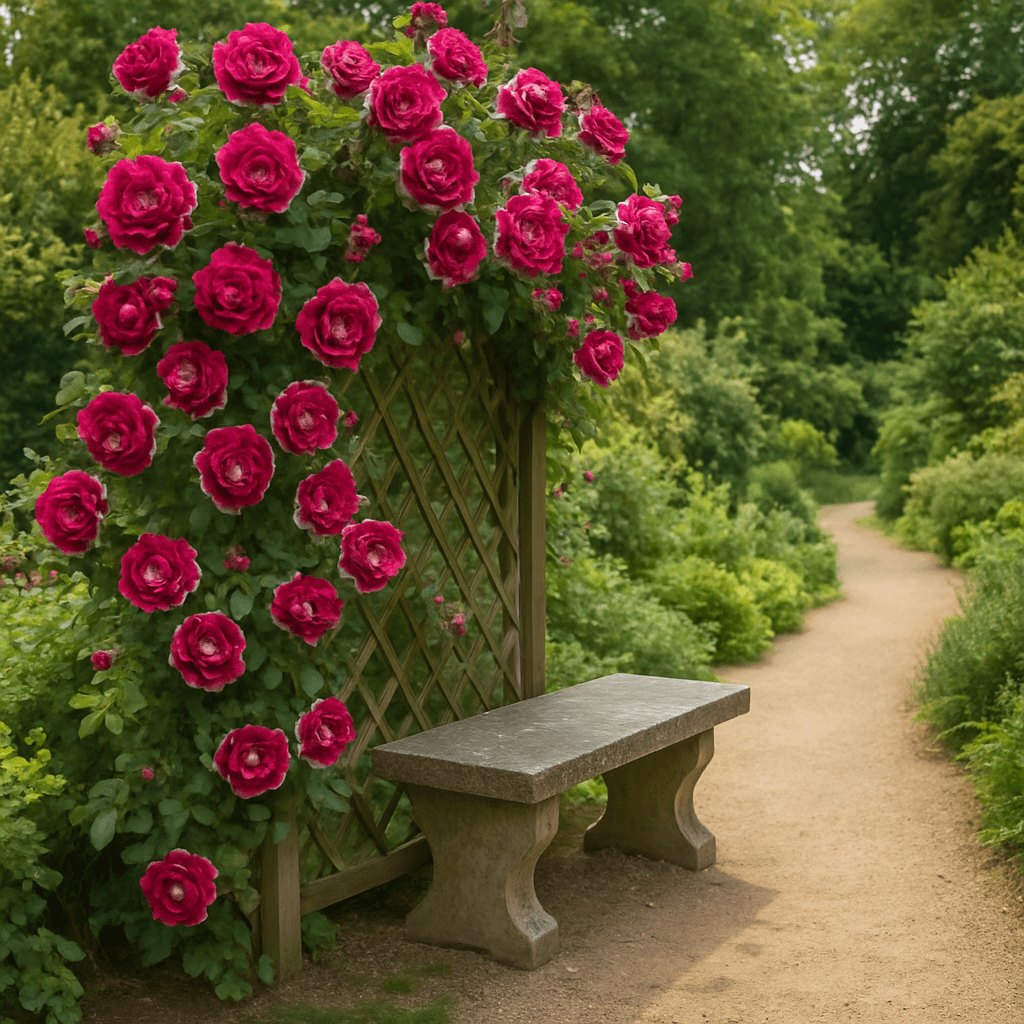
Whether you're creating a romantic Victorian rose garden or planting this crimson heirloom rose in a container, its striking bloom enhances any landscape. Begin with a single plant. By ensuring good air circulation and providing standard winter protection for Hardiness Zone 5, you can elevate your outdoor space and preserve an impressive piece of living history in your own garden.