
The Field Thistle: A Weed in Focus
For garden owners and farmers, it is often a red flag, but for insects, it is a true blessing: the field thistle (Creeping thistleHardly any other native wild plant divides opinions so much. While it conquers beds and fields with its deep roots, it simultaneously makes an enormous contribution to biodiversity. In this article, we take a close look at this fascinating plant. We will explain how to recognize it, why it is ecologically valuable, and how to effectively and sustainably remove it from your garden if necessary.
What is the arable thistle? Features and identification
To successfully work with wild herbs, you must first be able to identify them precisely. Creeping thistle Fortunately, the identification features are quite concise, even though distinguishing between different daisy family weeds can sometimes be difficult for laypeople at first glance.
The plant is characterized by the following properties:
- Growth: It reaches growth heights of 30 to over 120 centimeters. The stem is usually ribbed and almost hairless.
- Leaves The leaves are alternately arranged, lobed and pinnately divided, and have painful, sharp spines on their margins.
- Blossoms The purple to light purple tubular flowers sit in small heads.
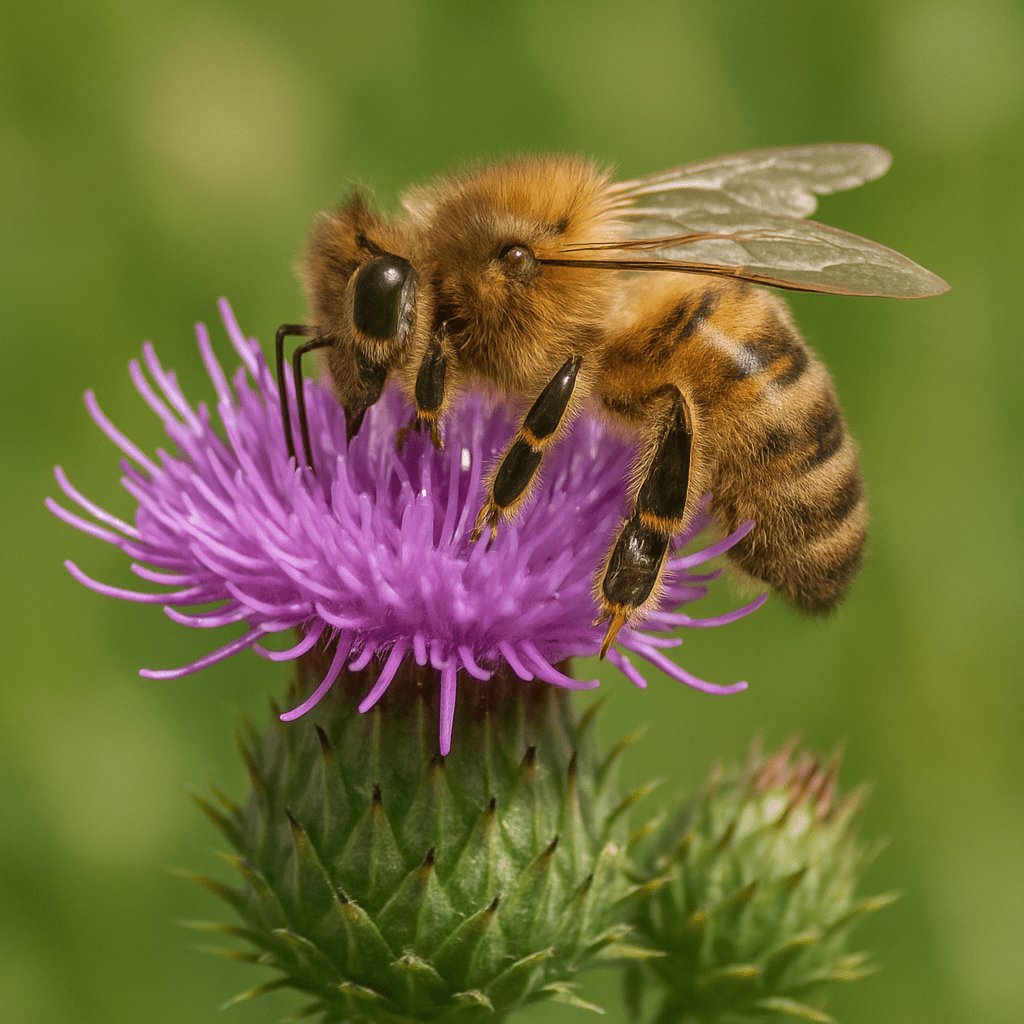
Many nature lovers and walkers ask themselves in the summer: When do thistles bloom by the roadside? The main flowering period of the field thistle extends from July to September. During this time, it transforms into a veritable magnet for insects.
Furthermore, the plant reveals a lot about the nature of the soil in which it grows. It is considered a classic indicator of nitrogen in the soil profile. Where it appears in large numbers, the soil is usually heavily compacted, loamy, and extremely nutrient-rich.
The Hidden Root Network: A Botanical Masterpiece
What makes this thistle species so strenuous for gardeners happens hidden underground. The field thistle is a perennial plant and belongs to the root weeds. The enormous root depth of persistent weeds like this one is impressive: The main root can penetrate the soil up to three meters deep.

Horizontal runners (rhizomes) branch off from this deep taproot, from which new shoots constantly grow to the surface. Dealing with such vital rhizome geophytes in organic farming and in the home organic garden is an immense challenge. A chopped-off piece of root in the soil is often enough to produce a completely new plant.
Ecological Benefit: More Than Just a „Weed“
Before we get to combating it, we should appreciate the plant's enormous value to our ecosystem. Those who rigorously eradicate every wild herb often harm native wildlife.
The Spear Thistle is an outstanding nectar source for native insects. Its nectar value is extremely high, attracting honeybees, countless wild bee species, and hoverflies. Furthermore, it is the absolute food source for Meadow Browns. The caterpillars of this beautiful butterfly feed almost exclusively on the plant's thorny leaves. Goldfinches also appreciate the oil-rich seeds of the faded flower heads in autumn.
Medical Application: Hidden Healing Powers
Wild herbs have a long tradition in natural medicine. Even though the milk thistle often comes to mind immediately when thinking of thistles, there are indeed exciting findings regarding the spear thistle. If you search on search engines for Field Scabious or more specifically Acker-Kratzdistel medicinal properties searches, encounters traditional applications.
For those who wish to utilize the healing properties of wild herbs, infusions can be made from young, still soft leaves or the roots. In folk medicine, the plant is said to have diuretic, anti-inflammatory, and liver-strengthening effects. However, please note: Harvesting is tedious and should only be done with thick gloves!
The Field Thistle in the Garden: Controlling and Removing
Even though its ecological value is undeniable, it can quickly get out of hand in flower beds and agricultural crops. If you learn how to identify spreading and potentially invasive plants in the garden, you can intervene early. (Note: The field thistle is native and not a classic invasive species in the sense of neobiota, but its rampant growth in cultivated landscapes often makes it behave that way.).
Superficial hoeing is not enough to stop root suckers in the vegetable patch. On the contrary: chopping up the roots only multiplies the plant. You have to tackle the root system in depth.
Practice Tip: Properly Digging Up Taproots Instructions
Looking for a reliable „How to Properly Dig Up Taproots Guide“? Here's the best way to do it:
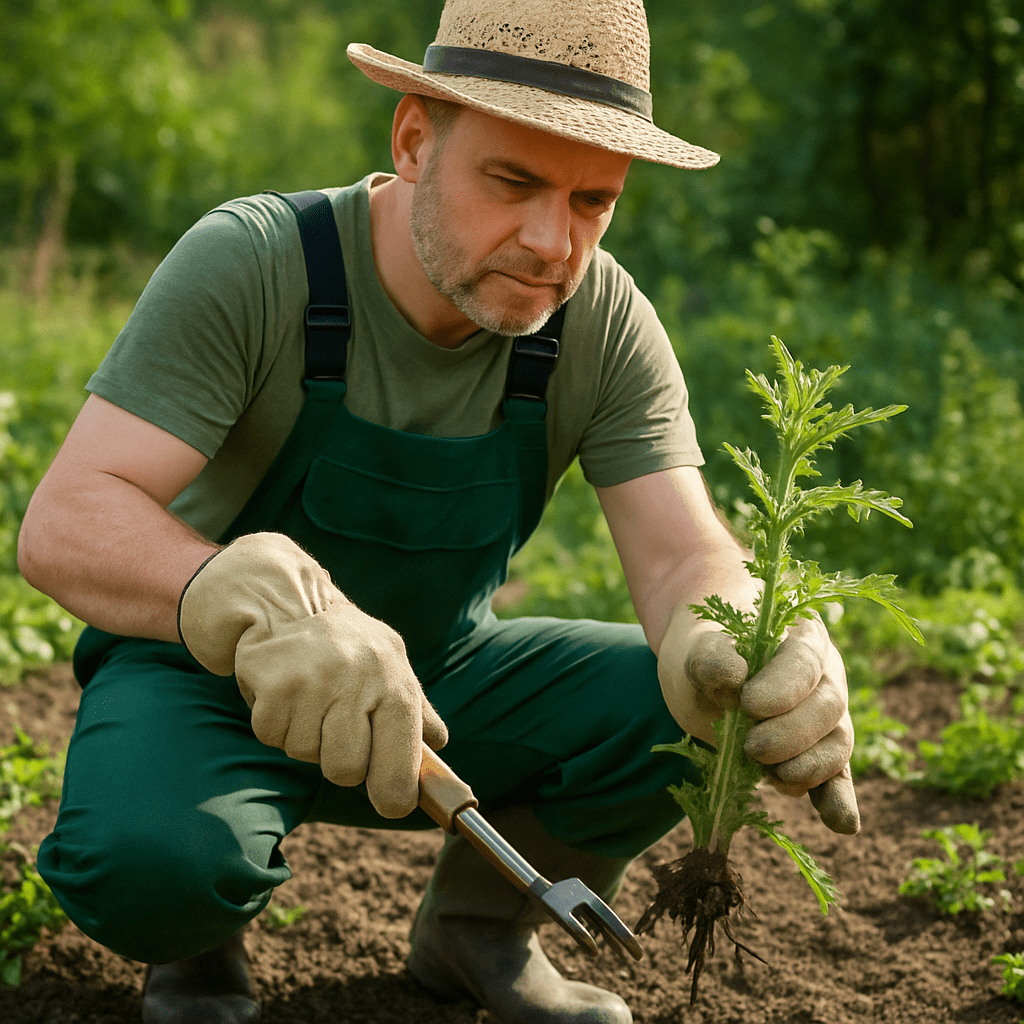
- Choosing the right time: Work after a rain shower. Long roots can be pulled out of moist soil much more easily without damage.
- The right tool Use a long, narrow weeding tool (dandelion weeder) or a specialized spade.
- Set the bar low Drive the tool vertically and as deep as possible into the soil right next to the plant.
- Lever, don't rip: Lightly press the pruner backward to loosen the soil. Grip the thistle just above the ground (don't forget gloves!) and gently and slowly pull it out, along with its long root.
Agriculture and composting
In agriculture, the problem is much greater. Ecological weed control on fields forgoes chemical herbicides. Here, reliance is placed on clever crop rotation, the cultivation of dense clover (which shades out and displaces thistles), and repeated, targeted mowing before flowering to deplete the plants' root reserves in the long term.
Once you have successfully weeded the plants in the garden, the question of disposal arises. An important piece of advice: extreme caution is advised when composting seed-bearing weeds! The seeds of the creeping thistle can survive without any problems on your home compost heap, which often does not get hot enough. If these are later spread in the garden with the composted soil, the problem starts all over again. Therefore, it is better to dispose of flowering or seed-bearing thistles in your residual waste or in the professional green waste bin. Vegetative plant parts (without flowers and without roots) can, however, be composted on your own compost without any problems.
Conclusion: A balancing act between tolerance and control
The Spear Thistle is far more than a mere nuisance. It's an ecological heavyweight that ensures the survival of bees and butterflies and loosens deep soil layers. Nevertheless, it's understandable that it has no place in a well-kept vegetable patch.
With the right knowledge about its deep root system, targeted digging, and a little patience, the plant can be kept well in check. Perhaps you'll even find a small spot in an unused corner of your garden where the spear thistle can bloom undisturbed – the Painted Ladies will thank you for it!