
Discover healthy recipes with daikon radish
Have you ever wondered about the pale yellow flowers at the edge of the field during your walks? Raphanus raphanistrum is often dismissed as mere field weed, but ecological observations prove its enormous value to nature. This herb is the wild ancestor of our familiar garden radishes and shares their sharp spiciness. Many mistakenly believe the plant to be poisonous or worthless, but since wild radish is edible, it holds surprising culinary potential for gourmets.
Besides its intense flavor, the plant provides exciting information about its immediate surroundings. Botanical field studies classify the species as an indicator plant for soil quality, as its abundant presence specifically points to soils with low calcium content. With the right knowledge, this underestimated wild vegetable is easy to find and prepare deliciously.
Preventing confusion: How to reliably distinguish wild radish from wild mustard
The delicate flowers at the edge of the field often pose puzzles. Both plants show typical Brassicaceae characteristics, in which four petals are arranged like a small cross. But the Difference between common ivy and field mustard can be reliably identified with a simple look-and-tap trick, so you'll never confuse the two look-alikes again.

Use these three for your secure determination Raphanus raphanistrum identifying characteristics:
- Flower veins The petals of the wild radish are crisscrossed by a delicate network of striking, usually purple or dark veins.
- Shotgun mold: If you Identify leguminous pods botanically Want to, pay attention to the structure. Unlike smooth pods, these constrict between each seed and look like a tiny, knobbly string of beads.
- Stem feeling Run your fingers over the lower part of the stem; with radishes, this is noticeably rough and bristly hairy.
Once you know these fine details, you're guaranteed to pick the right plant by the wayside. In addition to secure identification, the plant's inner qualities are particularly convincing.
The Power of Mustard Oils: Why the Pungency of Wild Radish Benefits Your Health
When you taste a leaf of wild radish, you immediately notice a pleasant peppery spiciness. Responsible for this piquant bite are special plant defense compounds, the so-called glucosinolates. While they protect the plant in nature from herbivores, they unfold amazing power in the human body. The Glucosinolates Effect and Health are closely related because these natural substances act like a gentle, herbal antibiotic. They fight unwanted bacteria and explain the traditional Healing effects of wild radish species for mild colds or as a natural home remedy.
In addition to fighting infections, the herb greatly boosts our metabolism. Those who often struggle with persistent fatigue in the spring will benefit enormously from the revitalizing properties of this Ingredients of edible wild herbs. The active ingredients specifically stimulate the production of digestive juices, allowing our bodies to process heavy meals more easily and quickly draw new energy. Thus, the supposed weed transforms into a small, free pharmacy right by the roadside, which can be ideally integrated into everyday culinary practices.
Culinary Diversity: Finding the Optimal Harvest Time from Leaf to Pod
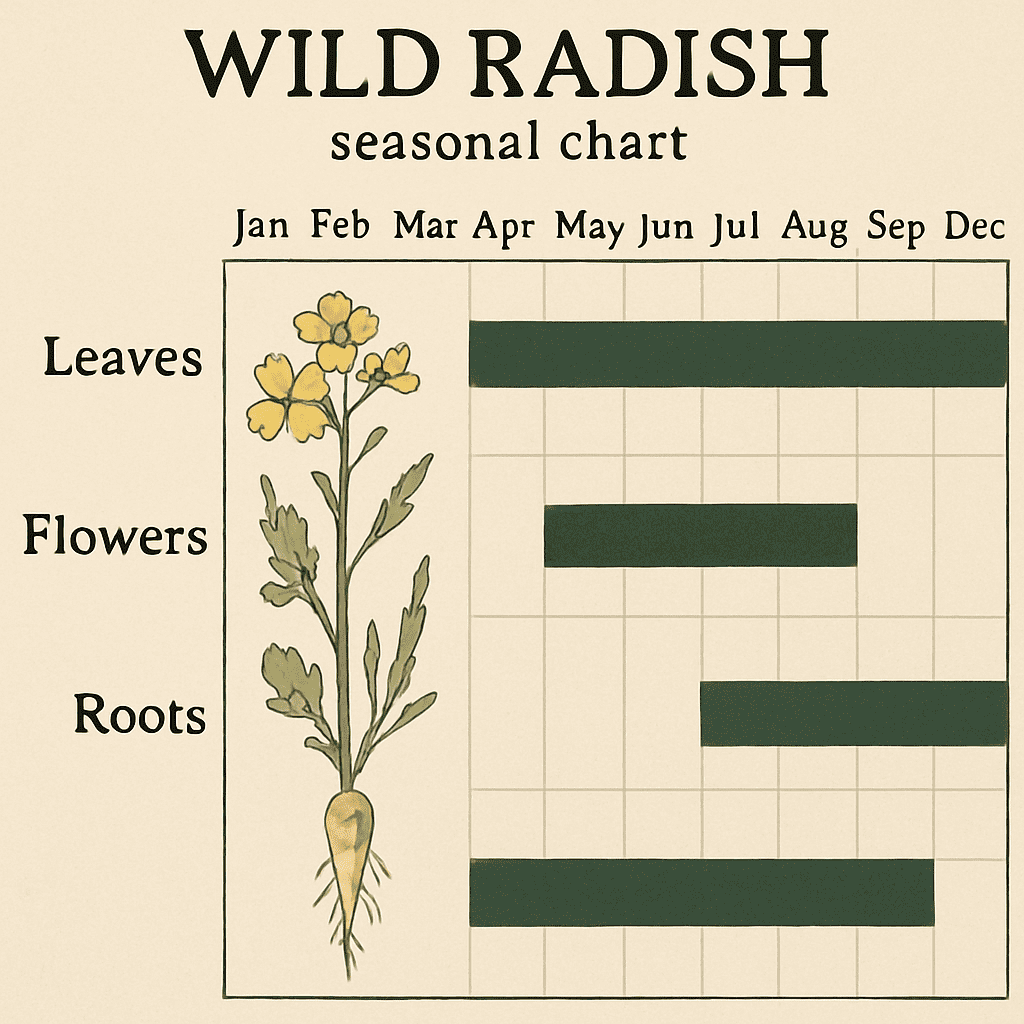
The optimal time for harvesting significantly influences the aroma of a wild herb. With wild radish, the plant is fortunately usable almost year-round, offering a natural „zero-waste“ approach for the kitchen. To achieve the perfect Harvest times for wild herbs To discover for yourself, this simple monthly overview helps:
- April (Leaves): Young, tender leaves add a mild spiciness to spring salads.
- June (Blossoms): The bright, cross-shaped flowers are perfect as an edible decoration.
- July (unripe pods): While they are still green and soft, the chopped pods can be pickled in vinegar as spicy „mock capers.“.
- September (Together): With the onset of seed ripeness, hard, fiery grains emerge as a pepper substitute – an ideal Instructions for collecting wild seeds in practice.
Your excursion into nature becomes particularly valuable when you collect mindfully. Always take only as many plant parts as you need, so that enough food remains for insects. This sustainable approach not only leads to first-class Wild vegetable recipes and preparation, but you also protect your local ecosystem.
Spicy-fresh recipes: How to conjure pesto and game spice from your finds
Once the harvest is in the kitchen, the creative part begins. The pungency of the daikon radish is noticeably wilder than that of the tame supermarket radish. Here, simple flavor balancing comes into play: to the fiery spice and slight bitterness Wild Herb Preparation to tame, we skillfully combine them with mild fats and a little sweetness. This way, everyday-suitable results are achieved Wild Vegetable Recipes, which also delight beginners.

For a fantastic Radish Pesto a few simple steps:
- Wash Gently clean and pat dry two handfuls of tender leaves and bright blossoms.
- Shredding Roughly chop the greens so the blender can process them better.
- Mix: Finely purée with mild olive oil, toasted walnuts, and Parmesan.
- Season to taste Finally, balance the spiciness gently with salt, a splash of lemon, and a little honey.
For those who like it even more robust, dried seeds are used in autumn. If you coarsely grind these in a mortar and mix them with sea salt, you get a powerful seasoning salt. This rustic Mustard seed uses gives roasted vegetables a strong kick, but should be used sparingly like chili.
Your Wild Plant Checklist: Sustainable Enjoyment and Next Steps
Field radish is an excellent introduction to the world of edible wild herbs. When foraging next, look for the distinctive cross-shaped flowers with dark veins, preferably harvest the young shoot tips, and be mindful of cultivated areas. This is how you can sustainably bring this native plant to your own plate.
Don't forget the ecological importance of field weeds: as a bee pasture, the plant nourishes countless insects. However, if the survivor conquers your vegetable patch, it can be controlled without chemicals by digging it out thoroughly – and the nutritious weeded material directly provides the basis for the next homemade wild herb pesto.