
Benefits and applications of field horsetail
For centuries, an inconspicuous wayside plant has been considered a true miracle cure in natural medicine and ecological gardening: field horsetail. In the past, this rough, almost bristly herb was used in many households to polish tarnished pewterware back to a high shine – hence its folk name, "Zinnkraut" (tin herb). Today, we appreciate this fascinating plant less for cleaning pots and more for its remarkable internal and external benefits.
Whether to strengthen human health, as a gentle cure for the body, or as a biological helper in the vegetable garden – the possible uses are astonishingly diverse. In this comprehensive guide, you will learn everything worth knowing about its origin, effects, and practical implementation in everyday life.
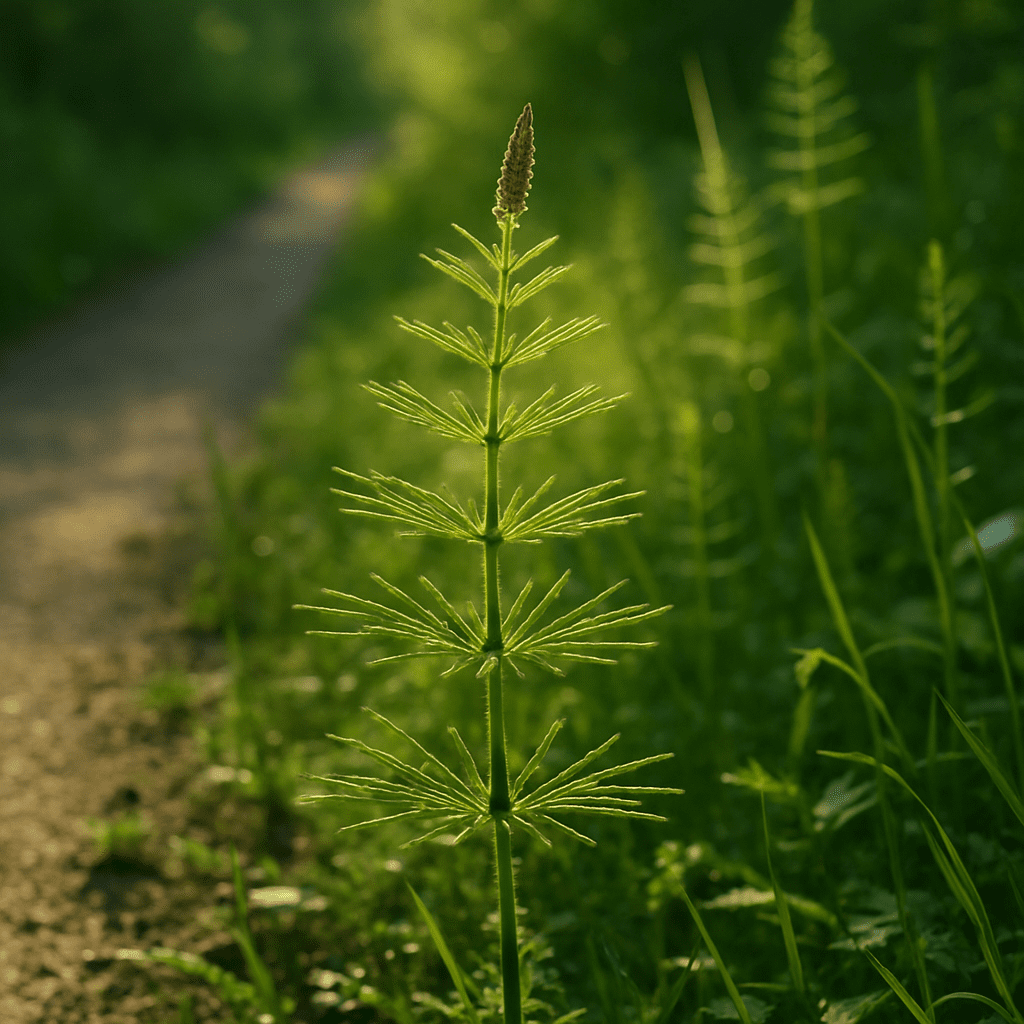
What is common horsetail (field horsetail)?
Botanically, the plant is considered Field horsetail is designated. It belongs to the spore plants and is a true „living fossil,“ as horsetails already populated our Earth during the age of dinosaurs and grew into giant tree-like structures at that time. Today, the plant remains significantly smaller at about 10 to 50 centimeters in height, but its active ingredients are more potent than ever.
When professionals talk about Equisetum arvense Ingredients and Uses speak, a specific element is clearly at the center: silica. Up to 10 percent of this valuable silicon compound is contained in the plant's green, fir-tree-like stems. The Healing power of silicic acid in naturopathy has been undisputed for generations. It is not only an essential building block for the human body but also elementary for the stability of plant cell walls. In addition to silicic acid, field horsetail contains valuable flavonoids (secondary plant compounds), potassium, saponins, and organic acids, making it a true all-rounder in herbal medicine.
As a so-called indicator plant, the Field horsetail in the wild, often points to compacted, loamy, and waterlogged soils. Its deep roots can reach up to two meters into the earth, which sometimes makes it unpopular with farmers, but allows it to transport valuable minerals from the deepest soil layers upwards.
The health benefits of horsetail
The traditional Zinnkraut application ranges from supporting wound healing to relieving chronic conditions. The plant's active ingredients target precisely where structure and cleansing are needed in the body.
A booster for skin, hair, and connective tissue
Silicic acid (silicon) plays a significant role in the formation and cross-linking of collagen and elastin in the human body. An adequate supply of Silica for hair and nails ensures that hair loss caused by nutrient deficiency can be reduced and brittle, soft fingernails can regrow strong and resilient.
In addition, regular consumption supports the natural strengthening of connective tissue. Anyone suffering from weak connective tissue, fine cracks in the skin, or cellulite can strengthen, firm, and make the tissue more elastic from the inside out with the trace element silicon. Wound healing also benefits from it: compresses made with horsetail tea are often used externally in folk medicine for slow-healing wounds or mild eczema.
Kidneys, urinary tract, and detoxification
Another very central area of application is the support of the urological system. Dandelion tea effect on kidneys and bladder is characterized by its circulation-promoting and mild diuretic properties. For bacterial and inflammatory diseases of the urinary tract (such as uncomplicated cystitis) or for kidney gravel, the tea is often recommended for flushing therapies. The body is cleansed and pathogens are flushed out more quickly.
At the same time, the herb helps excellently when one Naturally flush out water retention Light edema, swollen legs in the summer, or water retention before menstruation can be noticeably relieved with a targeted tea cure, without the body losing too many important electrolytes (as can be the case with chemical diuretics), as the plant itself is rich in potassium.
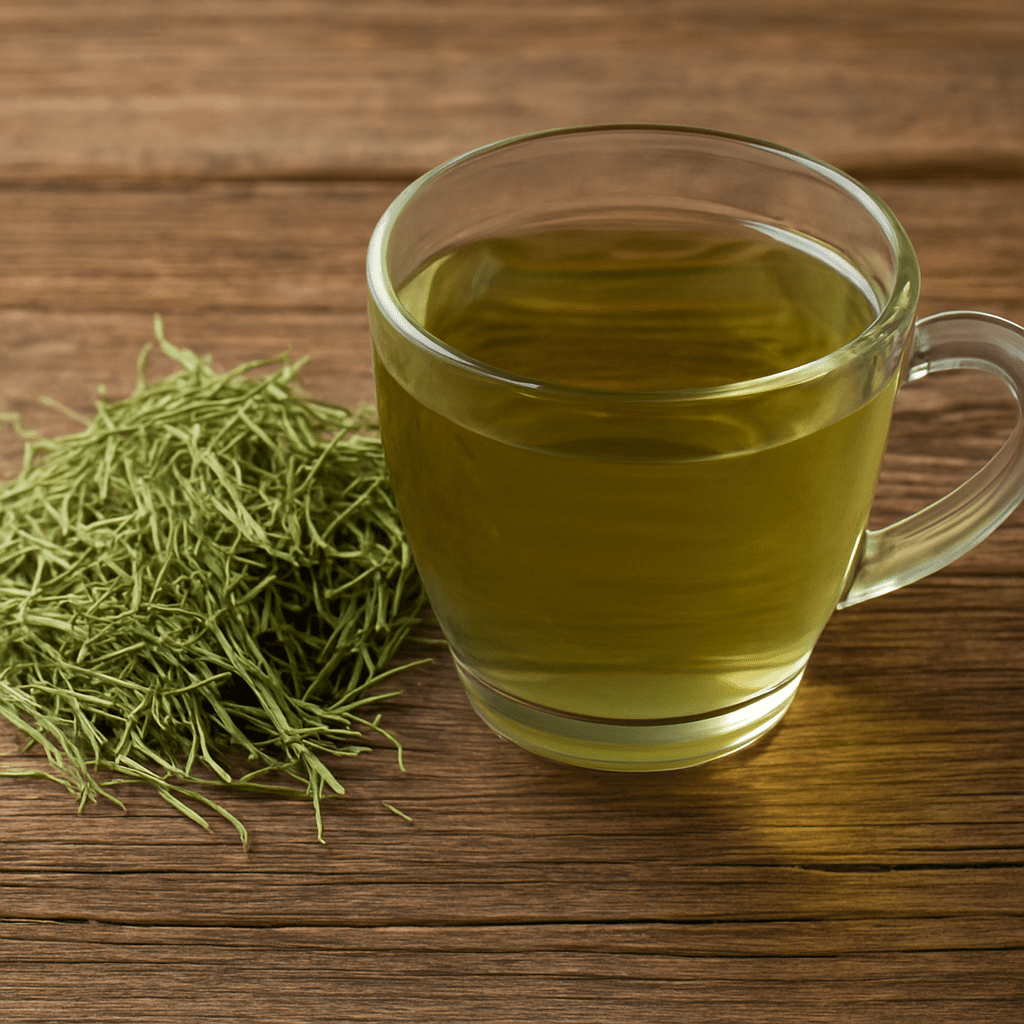
Yarrow Applications in Natural Medicine: How To
For the human body to optimally absorb the valuable active ingredients, especially the somewhat poorly soluble silicic acid, the right and careful preparation is required.
Classic Horsetail Tea
A correctly prepared horsetail tea is the best-known and most commonly used home remedy. Because the crystalline silicic acid does not dissolve as easily from the hard plant cell walls as the essential oils in other herbs (e.g., chamomile or peppermint), simply pouring hot water over it is not sufficient. The tea must be boiled.
Preparation of an effective tea:
- Add about 2 to 3 teaspoons of dried Field horsetail into a pot.
- Fill the pot with 250 to 300 ml of cold water.
- Bring the water to a boil and let the broth simmer over low heat for a good 15 to 20 minutes.
- Then strain through a fine sieve.
- During a flushing therapy, you drink two to three cups daily for a period of about three weeks. Important: Always drink enough still water at the same time to ensure the kidneys have enough fluids!
How to Make Your Own Horsetail Tincture
Those who don't like the earthy taste of tea or are looking for a more concentrated form that lasts longer often wonder: How to prepare a horsetail tinctureMaking it at home is surprisingly easy and requires only a few materials.
- Loosely fill a clean screw-top jar (jam jar) with chopped fresh or dried horsetail.
- Pour high-proof alcohol (at least 40% by volume, ideally grain spirit or vodka) over the plant parts until they are completely and generously covered.
- Seal the jar well and let it stand in a warm, bright place for about four to six weeks (but protected from direct midday sun).
- Shake the bottle gently every other day to dissolve the active ingredients and prevent mold.
- Afterward, filter the liquid through coffee filter paper or a fine cloth and fill the finished tincture into dark dropper bottles.
Application Taken daily, 15 to 20 drops (diluted in half a glass of water) wonderfully help to firm the skin structure and joints from the inside out.
Common Horsetail in the Garden: An Ecological Wonder
Not only humans, but also nature and our vegetable patch benefit enormously from this primeval plant. Anyone who wants to garden organically can hardly avoid horsetail.
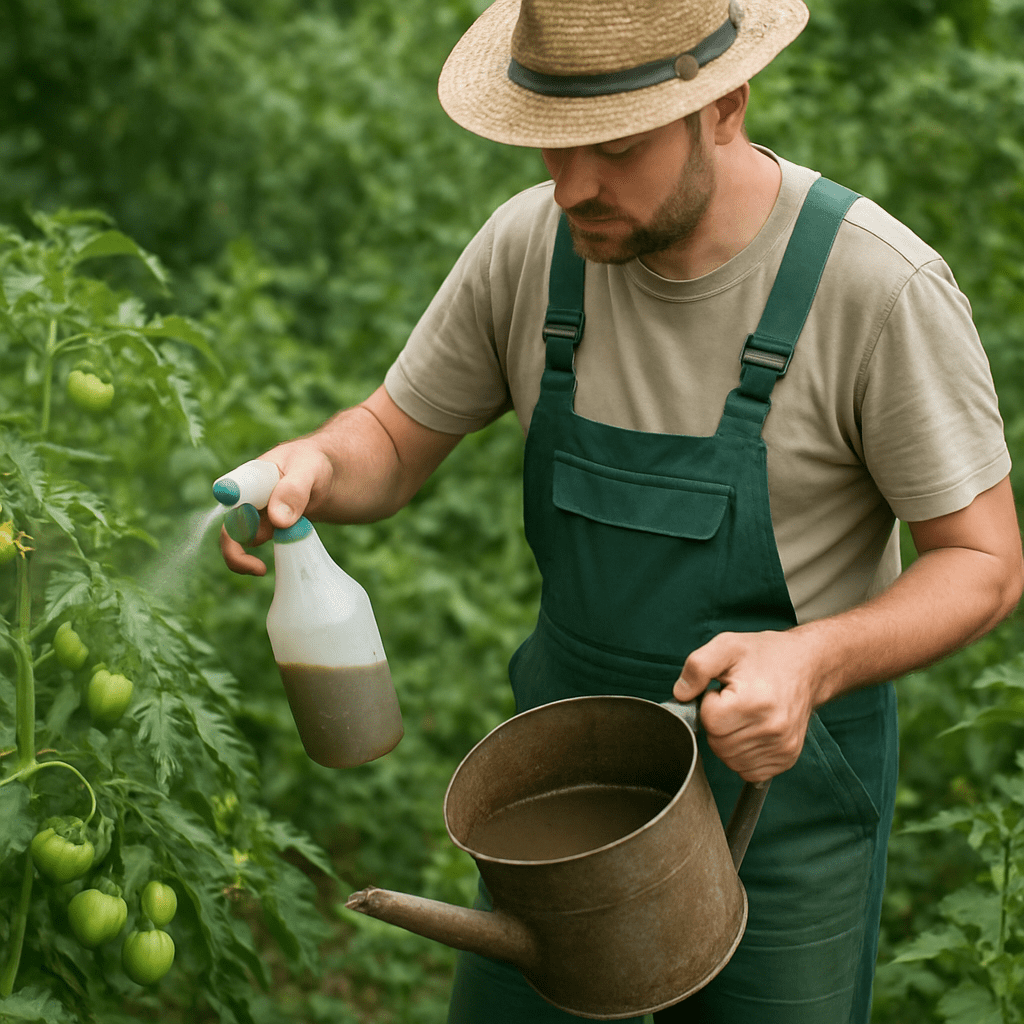
Plant protection products and organic fertilizers
The high silica content acts like a protective shield for leaves and stems in the garden. When the solution is applied to crops, silicon enormously strengthens the outer cell wall of the leaves. They become so hard and robust that invading fungal spores or biting insects have little to no chance.
A homemade, well-fermented Comfrey manure as a natural plant protection agent is in gardening circles the absolute Home remedies for powdery mildew and aphids. Additionally, the highly mineral-rich liquid manure serves as an excellent Organic fertilizer for tomatoes and roses. Tomatoes, which are susceptible to the dreaded late blight in a rainy summer, or roses, which often suffer from black spot, can be preventatively protected by regularly watering them with horsetail. The plant not only provides structure but also valuable potassium, which promotes fruit development.
Make borage
While a plant slurry ferments for weeks, smells extremely strong, and primarily functions as a root fertilizer, a decoction is much quicker to use, hardly smells, and is perfect for foliar feeding as well as direct prevention against fungal diseases.
Here's a short, practical Instructions for making tin herb broth:
- Step 1: Soak 100 g of dried herb (or 1 kg fresh) in 10 liters of collected rainwater for 24 hours.
- Step 2: Cook this approach on a low flame in a large pot for about 30 to 45 minutes the next day. The long cooking time is also important here to make the silica plant-available.
- Step 3: Let the broth cool completely, then strain it through a cloth.
- Step 4: To spray, dilute the decoction in a 1:5 ratio with clean water. On dry days, spray this solution finely atomized over the entire leaves of the affected plants in the morning (never in direct sunlight). Repeat this every one to two weeks with high fungal pressure.
Collecting and drying Common Purslane correctly
Anyone who wants to save money and enjoys spending time in nature can collect field horsetail themselves. This not only guarantees freshness but also connects you with nature. However, there are some very important criteria to consider.
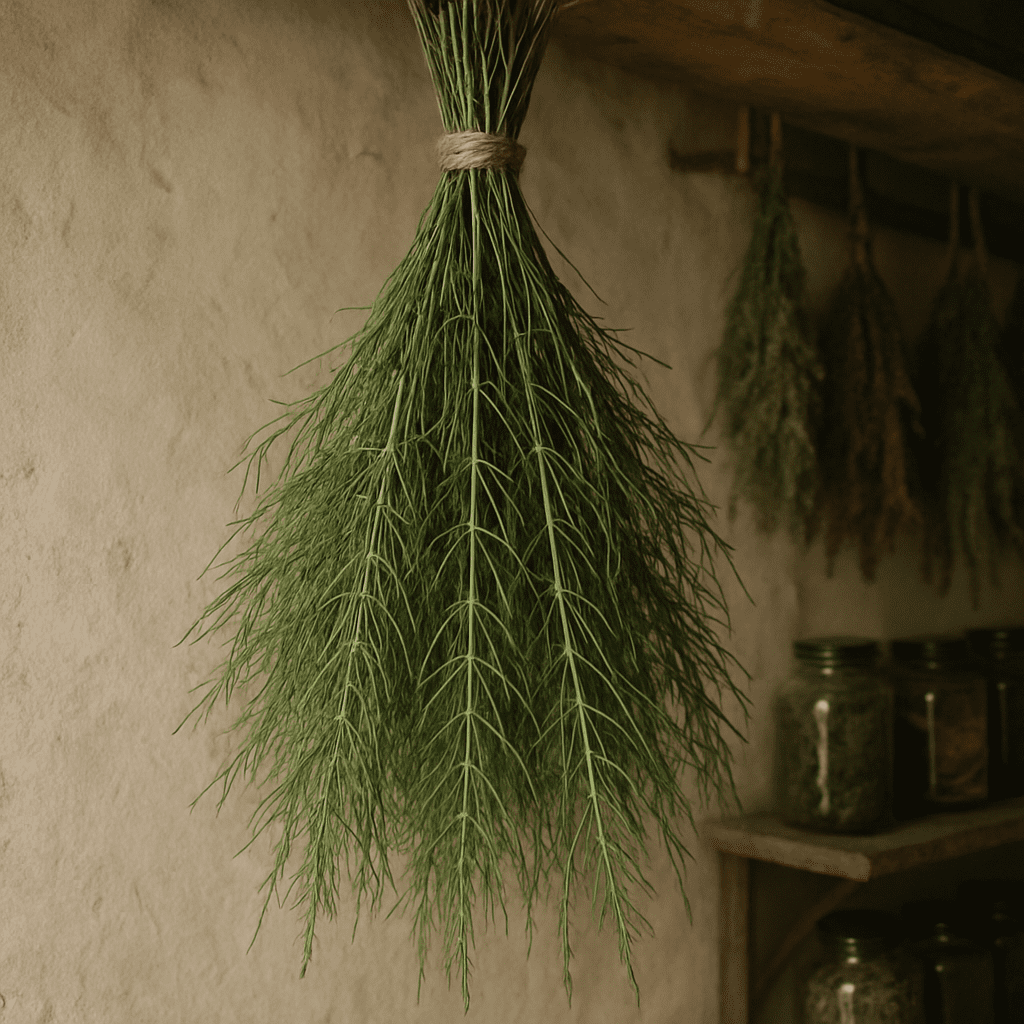
When and how to harvest?
Many herb beginners wonder: When is the best time to collect medicinal herbs the horsetail? In spring, the plant first produces brownish spore-bearing shoots – these are not collected. Only after that do the characteristic green, infertile summer shoots appear, which look like tiny pine trees.
These green shoots are ideally harvested between late May and mid-July. During these early summer months, the silica and fresh nutrient content is at its highest, while the stems are still juicy and not too woody.
Um Harvesting and drying Common Yarrow correctly To be able to, it's best to cut the sprigs with scissors in the lower third during dry, sunny weather (after the morning dew has dried). Loosely bundle the stems and hang them upside down in a airy, warm, and shaded place. Avoid direct sunlight, as it destroys the valuable active ingredients. As soon as the sprigs rustle and break immediately with a light touch, they are completely dry. Strip the needles from the main stem and store the herb in an airtight container in paper bags or dark screw-top jars.
Caution when collecting! The risk of confusion
As its name suggests, common horsetail often grows in fields, on embankments, along paths, or on dry meadow edges. However, anyone who collects in nature independently must absolutely Difference between field horsetail and marsh horsetail know. There is a serious Risk of confusion with poisonous horsetail species.
Marsh horsetailMarsh horsetail) contains the toxic alkaloid palustrine, which can cause gastrointestinal complaints, dizziness, and liver damage.
How can you tell the plants apart safely?
- The location: The common horsetail prefers dry, compacted loamy soils. The marsh horsetail, as the name suggests, likes it very moist and wet, and often grows directly in ditches or moorland meadows. Nevertheless, both can sometimes occur side by side in fringe areas.
- The length test (The most important feature): Consider the main stem and one of the emerging green side branches. On the main stem, where the branches originate, there is a black, toothed sheath (the so-called leaf sheath).
- At Field horsetail Is the lowest link of the side branch always clear longer as this black leaf sheath of the main stem.
- At the toxic Marsh horsetail is the first link of the side branch always shorter as long as (or at most as long as) the associated leaf sheath on the main stem.
- If you are not one hundred percent sure about a plant in nature, do not take any risks. It is better to buy the herb dried and in controlled, safe organic quality at a pharmacy, health food store, or qualified online retailer.
Conclusion: A versatile helper for health and garden
Whether you want to enhance your vegetable garden in an ecological way, sustainably improve your complexion and nails, or naturally relieve minor urinary discomfort – field horsetail is a true all-rounder in the plant world. Its unparalleled amounts of bioavailable silica, combined with valuable minerals like potassium, make it absolutely indispensable in both the natural medicine cabinet and environmentally conscious gardening.
With knowledge of the correct preparation of tea, tincture, or slurry, you can fully harness the power of this ancient plant. So, the next time you're walking along a summer country lane and discover the rough herb that resembles a miniature fir tree, you'll know exactly: you're not just standing in front of a weed, but one of the most fascinating and useful medicinal plants that nature provides us.