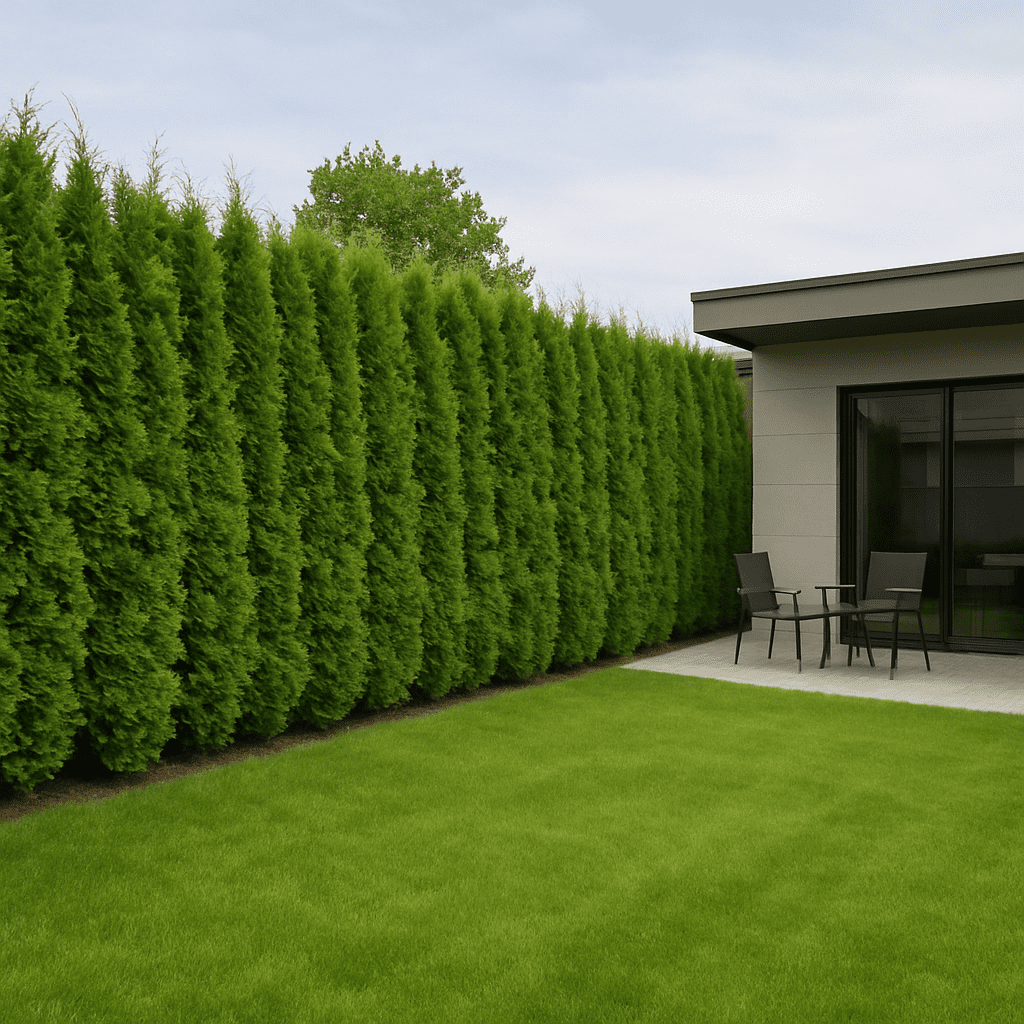
The Symbolism of the Western Tree of Life
If a plant had a superpower, it would be the sheer endurance of the Thuja. According to historical records, this evergreen saved the explorer Jacques Cartier from scurvy in the 16th century, as its vitamin-rich foliage was brewed into a life-saving tea. From this miraculous healing emerged the name Tree of Life – A title that goes far beyond an old myth.
Today, the Tree of Life Meaning both historical fascination and landscape gardening value. Because the Western Red Cedar Even in the frostiest winter, it retains its vibrant green, making it traditionally a living symbol of eternal life and unwavering constancy in garden design.
You will immediately recognize the secret to this resilience when you touch a branch. Instead of prickly needles, the plant has so-called scale leaves (soft, flattened needle structures) that lie tightly packed together like tiny roof tiles. This clever shape helps the plant to store moisture efficiently – the fundamental basis for correctly understanding its care needs.
Emerald or Brabant? Find the right variety for your needs
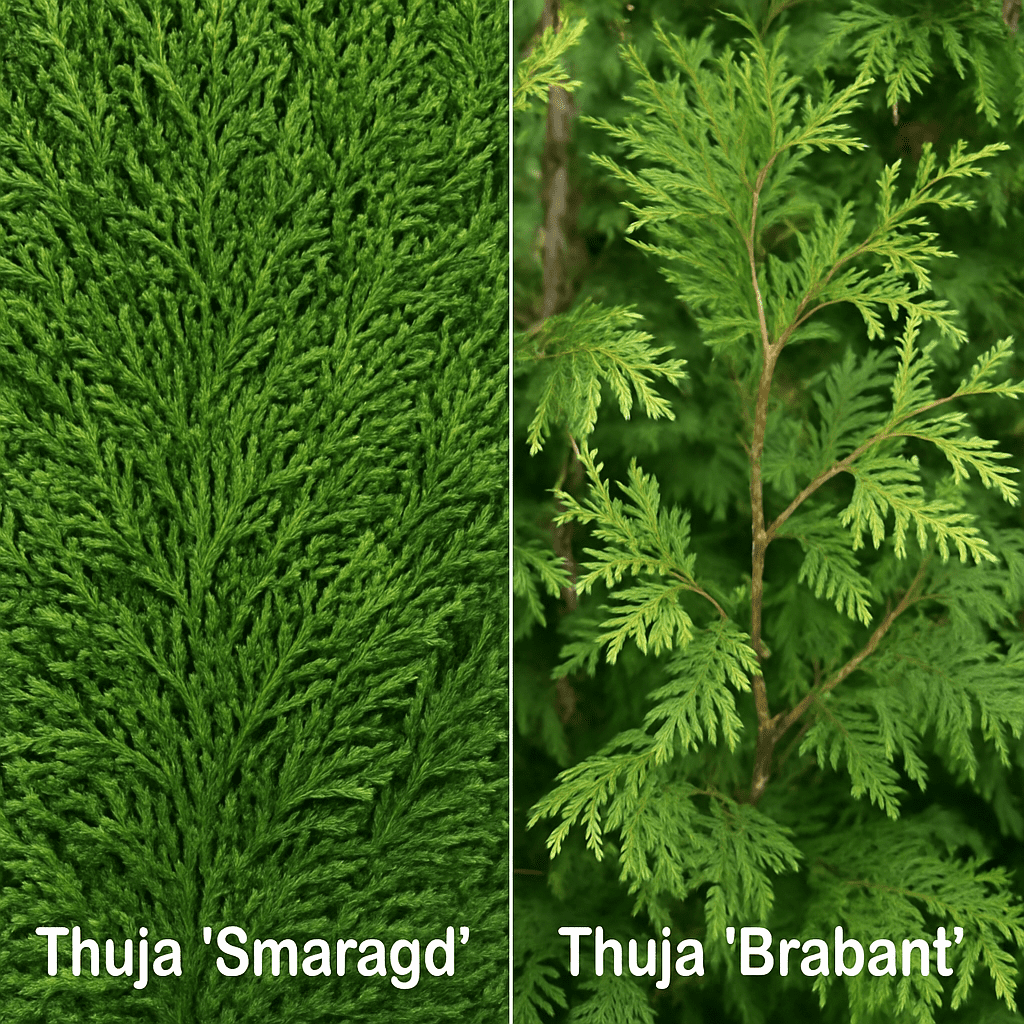
If you want an opaque green wall quickly, the Brabant variety is often the best choice. It's the sprinter among ornamental trees and ideal for creating large hedges cost-effectively. Its annual growth rate in cm is particularly impressive, reaching a remarkable 40 centimeters with this variety. While the foliage quickly forms a dense curtain as a result, it requires regular pruning with garden shears in return.
In contrast, the more compact alternative proves to be significantly easier to care for. In direct comparison Thuja occidentalis Smaragd vs. Brabant The Emerald, with its naturally narrow, conical growth habit, makes it perfect for smaller gardens. This variety grows slower, maintains its elegant shape almost on its own, and saves you a lot of pruning work. Additionally, as an evergreen, frost-hardy privacy hedge, it impresses with its special color retention: even in freezing temperatures, the Emerald retains its deep, vibrant green, while the Brabant variety often turns slightly brownish in winter.
Therefore, your final choice simply depends on whether you prefer quick results or minimal maintenance.
From shallow roots to a dense privacy screen: How to plant correctly
A successful start begins with the right spot in the garden. When it comes to fulfilling the site requirements of partial shade or sun, the Thuja tree is pleasingly flexible and grows well in both locations. Much more important is the soil beneath its feet: the earth should be loamy and moist, but excess water must always be able to drain away, as waterlogging harms the plant.
An important special characteristic is hidden underground anyway. For those who wonder whether the root system forms shallow-rooted or deep-rooted plants, there is a clear answer here: the thuja is a classic shallow-rooted plant. Its roots do not anchor deep into the soil but spread out close to the surface like a large plate. This is precisely why the tree is very sensitive to rapid drying out in midsummer.
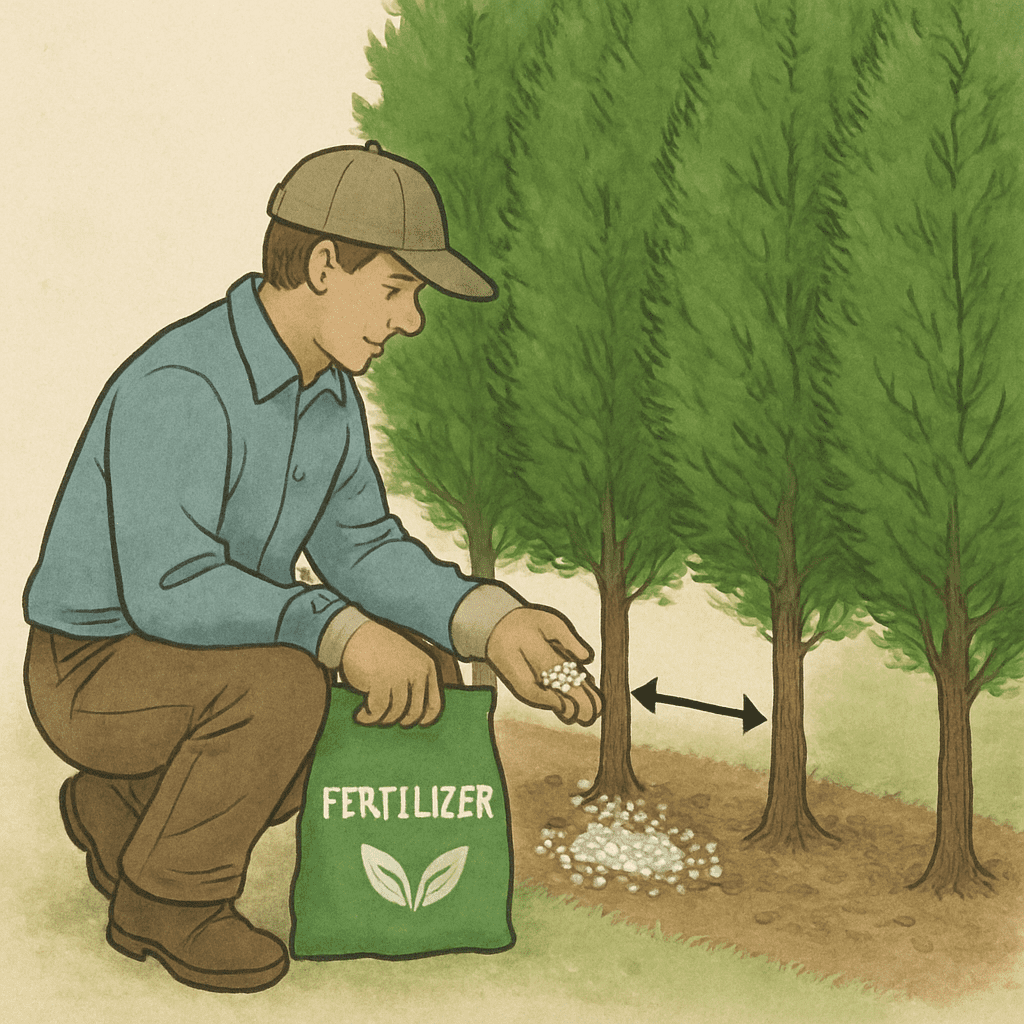
To properly plant your Thuja hedge, precise spacing is crucial. Optimal planting distances for density prevent the shrubs from competing for water later on or leaving unsightly gaps. Simply follow this checklist:
- Calculate distance: Plan for 40 to 50 centimeters between each trunk.
- Dig planting hole: Dig the hole twice as wide and deep as the actual root ball.
- Jump-start Generously water the new planting with the garden hose immediately after planting.
Once your new privacy fence is firmly rooted, healthy growth will be largely unobstructed. Continuous care is now important to prevent unsightly discoloration early on.
The Mystery of the Brown Branches: Care Tips with Epsom Salt
Sudden loss of color often causes uncertainty: why are the branches turning brown? While dry branches deep inside hedges usually indicate a lack of water, pale needle tips often signal a genuine nutrient problem. Evergreen conifers in particular consume a lot of magnesium during growth to maintain their vibrant color.
Here's where a tried-and-true home remedy comes into play. The targeted application of Thuja fertilizer, specifically Epsom salt, effectively returns this missing building block to the plant. Spread the granular mineral generously around the base of the trunk in spring and then water thoroughly so that the shallow roots can absorb it directly.
Besides nutrition, the outer silhouette significantly determines the vitality of the hedge. Reliable instructions for trimming conifers always recommend the so-called trapezoidal cut, which starts wide at the bottom and tapers slightly towards the top. This angled shape ensures that even the lowest branches receive sufficient sunlight at all times and do not become bare over the years.
With the right nutrient mix and regular pruning, your plant wall will remain permanently dense. However, the gardener's self-protection should not be neglected during all care measures.
Safety and Alternatives: What You Need to Know About Toxicity
Behind the dense greenery lies an effective, yet invisible, protective mechanism. The arborvitae produces natural essential oils like thujone. Think of it as a built-in insect repellent: it makes the shrub extremely resilient, but also highly toxic to pets and children. If curious puppies nibble on the low-hanging branches, this herbal self-defense can quickly become dangerous.
Despite this strong defense, the plant is not completely invulnerable, which is why you should consider the following details for your garden design:
- Thuja Leafminer Damage: How to Recognize It Watch for hollow, silvery-gray shoot tips where small caterpillars bore tunnels. At first glance, this infestation is often mistakenly attributed solely to lack of water.
- Yew as an alternative to a hedge: Unlike the sun-loving thuja, it also grows perfectly in deep shade and regrows easily from old wood. However, its needles and berries are also highly poisonous.
Whoever wants to control access for animals resorts to a simple solution. You can keep compact hedge plants in pots and place them flexibly out of reach on the patio.
The All-Season Wall: Your Plan for a Vibrant Family Tree
You now have the practical knowledge to transform a simple planting into a dense, two-meter-high green wall within three to five years. To best care for your Western Arborvitae and ensure healthy annual growth of 20 to 30 centimeters, this straightforward care calendar will help:
- Spring Fertilize the hedge to specifically promote new growth.
- Summer Water thoroughly to avoid dangerous heat stress.
- Autumn Perform the last light pruning before winter.
- Winter Protect plants from road salt and water them during frost-free periods to prevent drought damage.
With these targeted measures, your evergreen, winter-hardy privacy hedge will become a low-maintenance, long-lasting element of your landscape. Step into your garden in mid-January, be surrounded by the vibrant green, and enjoy the deep tranquility that only a truly private retreat can offer.