
Care and cultivation of abelias in the garden
Imagine a garden landscape that blooms tirelessly from summer to fall, without demanding your weekends with elaborate care. While this may sound impossible, horticultural practice shows that the abelia is a true gem for just this purpose.
Although the name might remind you of penguins, this hardy shrub belongs to the honeysuckle family (Caprifoliaceae). Behind the delicate, pollinator-friendly bell-shaped flowers lies enormous robustness, making it the ideal, low-maintenance hedge plant for any garden.
All it takes to enjoy months of beautiful blooms is some basic planning. With three simple key elements—the right location, a balanced water regimen, and occasional pruning—you can easily create a botanical haven right on your doorstep that practically takes care of itself.
Choosing the Right Abelia: From ‚Rose Creek‘ to the Fragrant Korean Abelia
Have you ever wondered why some gardens stay vibrant in winter while others appear bare? The secret lies in the careful selection of breeds, known as cultivars. With abelias, we experience the exciting contrast between evergreen and deciduous garden shrubs. The Bigflower Abelia retains its foliage in mild regions, while deciduous varieties become bare in autumn but are notably more frost-hardy.
To find the right plant for your climate zone and garden size, we'll compare three popular favorites:
- Rose Creek: A compact, densely green shrub that fits perfectly in small front yards.
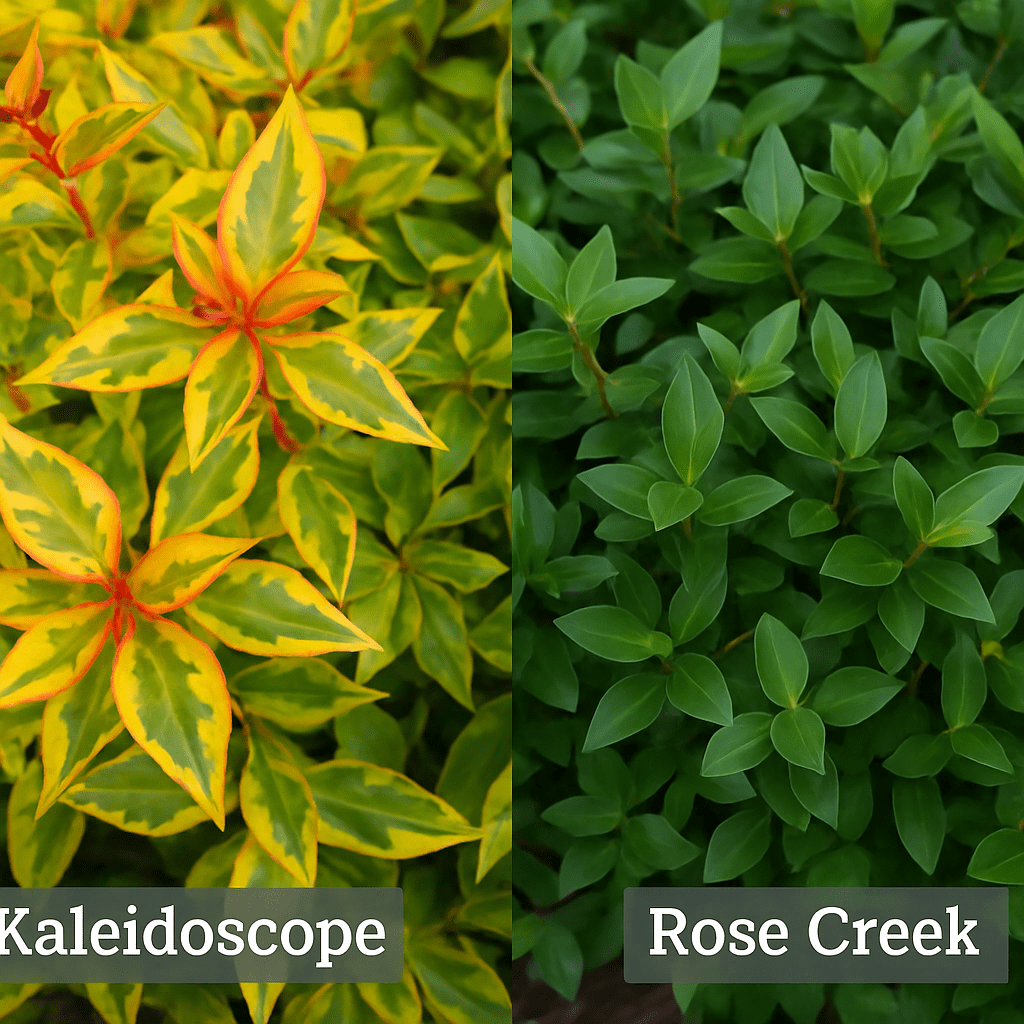
- Kaleidoscope A luminous play of colors, ideal as an eye-catcher.
- Korean Abelia A deciduous species that survives extreme winters and has an intense lilac scent.
The visual power of multi-colored leaves becomes particularly evident when directly comparing varieties like ‚Rose Creek‘ and ‚Kaleidoscope‘. These variegated leaves act like a mirror in nature: the more sun the Kaleidoscope Abelia receives, the more intensely its yellow-red edges glow, while the classic green of Rose Creek soothes the eye.
The ‚Goldilocks‘ Location: Sun, Soil, and the Right Planting Technique
Finding the perfect location is like the well-known „Goldilocks“ principle: the conditions can't be too extreme, but must fit just right. Since abelias are among the best fragrant shrubs for sunny spots, bright light is their daily engine. Pay particular attention to the sun requirements of variegated leaves: if a multi-colored variety like ‚Kaleidoscope‘ receives too much shade, its vibrant leaf pattern will inevitably fade to a dull green.
Deep beneath the ground lies the true heart of plant health. Since abelia detest „wet feet,“ well-draining soil is essential. Imagine ideal soil like a squeezed sponge: it retains enough moisture for hot days while allowing excess rainwater to drain away immediately, effectively preventing dangerous root rot.
For rapid growth at a new location, smart gardeners rely on proven planting techniques for healthy root systems. Always dig the planting hole twice as wide as the root ball, but never deeper. This way, the young roots immediately find loose soil for effortless spreading.
Cut Without Regret: The Art of Rejuvenation for Lustrous Shrubs
Garden shears lying ready often spark the fear of making irreparable mistakes during pruning. However, with Abelia, which is already considered one of the most low-maintenance and drought-resistant ornamental shrubs, this concern is unfounded. Since these shrubs bloom on so-called „new wood“ – meaning that the flower buds form exclusively on fresh growth of the current year – late winter or early spring is the perfect window for their use.
To maintain the plant's elegant, fountain-like growth habit, professionals use a simple rejuvenation technique: the one-third rule. If you want to learn how to effectively care for these glossy shrubs, simply remove the oldest, woody branch (no more than one-third of the shrub) at the base each year. This creates space for light and air inside without ruining the natural silhouette.
Especially if you want to shape compact shrubs for small gardens through targeted pruning, this three-step spring plan will help:
- Remove all wood. First, cut off any frozen or brittle branches completely.
- Find intersection point: Place the shears for pruning just above an outward-facing bud union.
- Rejuvenate Cut off old, bothersome shoots close to the ground.

Abelian Health: Why Leaves Turn Brown and How to Stop Fungi
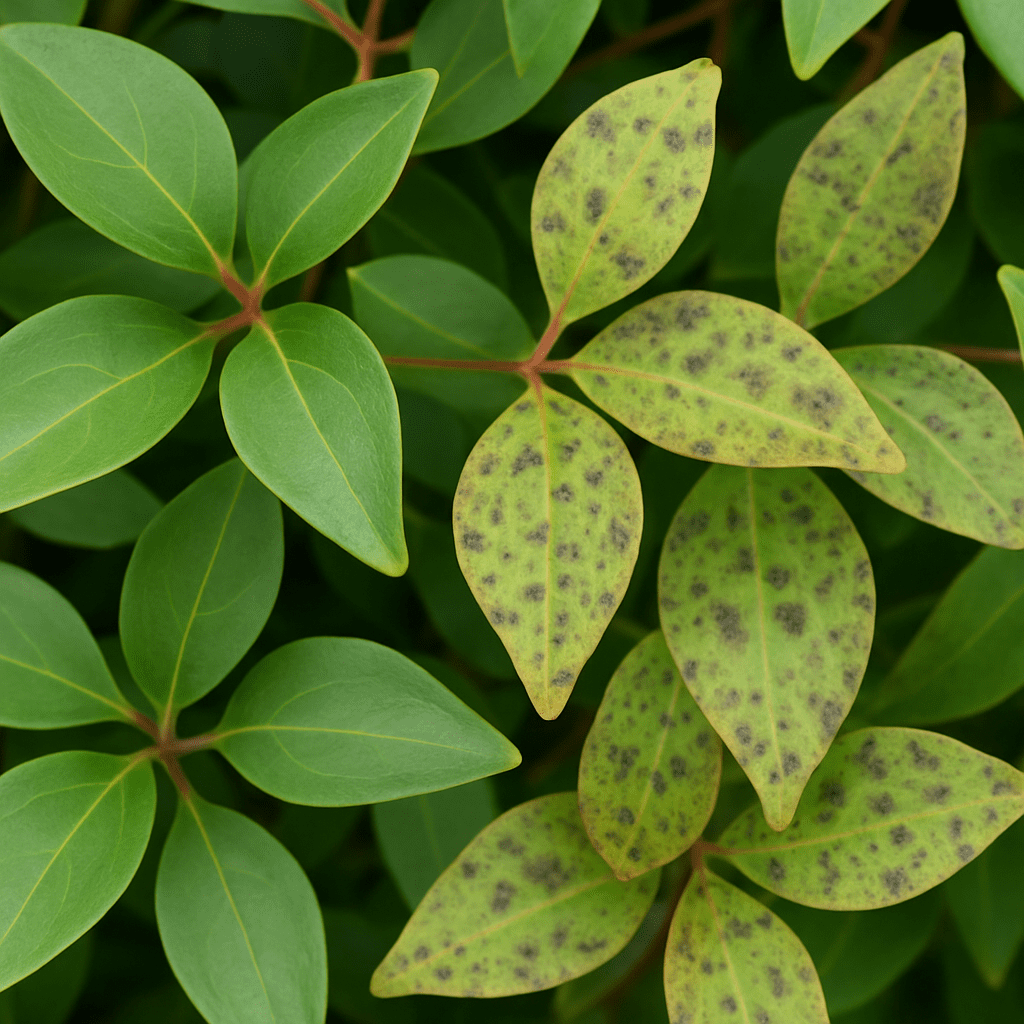
When temperatures drop, garden plants react to environmental stress. With abelias, this often manifests as copper-colored leaves, known as „winter bronzing.“ Those who worry and wonder why the shrub's leaves are turning brown can usually breathe easy: this autumnal hue is simply a natural defense against the cold. However, irregular, dark leaf spots are a completely different matter.
These signs indicate fungal pathogens that thrive in moist, stagnant air. The most important step to prevent frequent fungal diseases is a loose branch structure, allowing rainwater to dry quickly. Proper watering also protects against infections: young shrubs need regular moisture, while established specimens are perfectly fine with infrequent, deep watering directly at the root.
Whoever follows these basic rules from the care instructions for honeysuckle will preserve the vibrant radiance of the foliage. After all, a healthy, resilient shrub enriches the entire local ecosystem.
Garden design with added value: Abelia as a magnet for pollinators and an eye-catcher in small gardens
A vibrant garden needs strategic focal points. Compact Abelia varieties are ideal for small city gardens or balconies. There, they work their magic with pollinator-friendly bell-shaped flowers that magically attract bees. In suitable regions, their sweet fragrance entices nectar feeders and butterflies, making the shrub a true natural magnet.
For landscaping with year-round appeal, clever plant pairing is crucial. These four companions perfectly complement the Abelia:
- Spring onions for early splashes of color before leafing out.
- Lavender as a summer addition to the insect buffet.
- Autumn asters that harmonize with the late abelia bloom.
- Hollies, whose winter berries glow as the abelia rests.
Those who combine them skillfully sustainably support local biodiversity. Your beds offer animals food year-round while requiring less care.
Your Action Plan for a Successful Abelia Season
Heat-sensitive plants no longer need to be a cause for concern in midsummer, as drought-resistant ornamental shrubs like the Abelia can handle these conditions perfectly. First, check the soil quality and drainage at the desired planting site.
Once good drainage is ensured, choose a variety that suits the character of your garden. With this preparation, you will plant a resilient, low-maintenance companion that will reward you with effortless beauty for years to come.