
Care and Use of Lavender and its Varieties
You're surely familiar with the classic lavender fields of Provence, but have you discovered lavender with „bunny ears“? French lavender is the spirited cousin of the plant family and immediately captures the eye with its dramatic appearance.
Unlike common true lavender (Lavandula angustifolia), Lavandula stoechas features a striking crown. Atop the flower sit bright bracts, known in technical terms as "bracts," which remarkably resemble tiny butterfly wings.
Based on experience, this shrub provides long-lasting colorful accents with its extralong blooming period. With the simple tips from this Lavandula stoechas care guide, you are guaranteed Mediterranean flair on your terrace all summer long.

The Ideal Location: Why Your Catmint Needs a ’Sour‘ Diet
Imagine the sun is like a charger for your plants. For butterfly lavender to fully bloom its vibrant purple flowers, it needs at least six hours of direct sunlight daily in a full sun location. If it's too shady, its internal battery remains empty and the striking colors fade.
However, light alone is not enough if the „diet“ is wrong. Here, there are significant differences in location compared to the classic lavender: English lavender strictly prefers an "acidic" diet. If the soil is too chalky, this immediately blocks the plant's nutrient uptake, and its growth stagnates completely.
Besides the correct acidity, soil permeability is extremely important, as the fine roots absolutely cannot tolerate wetness. You can easily mix your own ideal, sandy substrate for pots or garden for Mediterranean herbs:
- 60 % Rhododendron Soil (provides the necessary acidic pH level)
- 30 % coarse sand (loosens up the structure)
- 10 % expanded clay (as the bottom drainage layer in the pot)
Maintain this perfect environment long-term by consistently using rainwater – it is the most natural lime-free water for garden plants.
Proper Watering and Fertilizing: Safely Avoiding Waterlogging
Even the best soil is of little use if the watering can is used too often. After all, bee-friendly plants for the balcony love Mediterranean dryness. Evaporation protection, such as a thin layer of fine pine bark on the soil surface, protects against rapid drying out on hot summer days, without you having to water constantly.
If you want to reliably avoid waterlogging in plant pots, every good Lavandula stoechas care guide relies on this simple routine:
- The finger test If the earth still feels like a wrung-out sponge two inches deep, wait to water.
- The right water: Consistently use rainwater so that no lime destroys the vital acidic pH of the soil.
- Intact drainage layers: Excess irrigation water must be able to drain immediately through the expanded clay granules at the bottom of the pot, as the fine roots will otherwise inevitably rot.
When fertilizing, the shrub behaves like a very thrifty eater: a little liquid rhododendron fertilizer every four weeks is perfectly sufficient in the summer. If the nutrient supply is correct, the plant will grow quickly and vigorously.
Pruning Lavender: The Haircut for More Bloom Power
Have you ever wondered: Why does lavender get brown branches? As a subshrub, the plant naturally becomes woody from the bottom up. Without regular pruning, these shoots will become completely bare. Cutting deep into this old wood is an operation the shrub often doesn't survive. To keep it vital and bushy, you must prune your lavender while the branches are still green.
This pruning after the first bloom – also called regrafting – often awakens a second wave of flowers in late summer. Here's how to do it:
- Tool Use sharp, clean garden shears to avoid crushing.
- Cutting depth Cut off the withered parts and a maximum of one-third of the green shoot.
- Form A slightly rounded cut ensures the desired compact growth.

After winter, the main pruning occurs in spring. Cut the plant back by about half – but strictly remain in the leafy area!
Hardy or frost-averse? How lavender survives the cold
As the thermometer drops, many plant lovers worryingly ask: Is lavender hardy? The frost resistance of these semi-shrubs from Southern Europe is often simply not enough for our icy months. Based on local frost resistance zones, it quickly becomes clear that this heat-loving plant can only survive unharmed in the garden in very mild wine-growing regions.
How to overwinter butterfly lavender successfully then? The safest place for the plant is a bright, cool, but frost-free spot indoors. However, if the pot remains outside on the balcony, it must be warmly packed to prevent the sensitive roots from freezing through.
If Father Frost is still unsparingly harsh outdoors, a tried-and-true trick helps: you can provide robust replacements in good time through propagation by cuttings. If you want to propagate cuttings in the summer, simply cut off a few green shoot tips without flowers and place them in moist soil, where they will quickly form new roots on the windowsill.
This young offspring will spend the cold season safely indoors and guarantee you a fresh start directly in the coming spring. Combine this proactive plan with solid cold protection for the mother plant – that is your way to a Mediterranean sea of blossoms on your terrace and balcony.
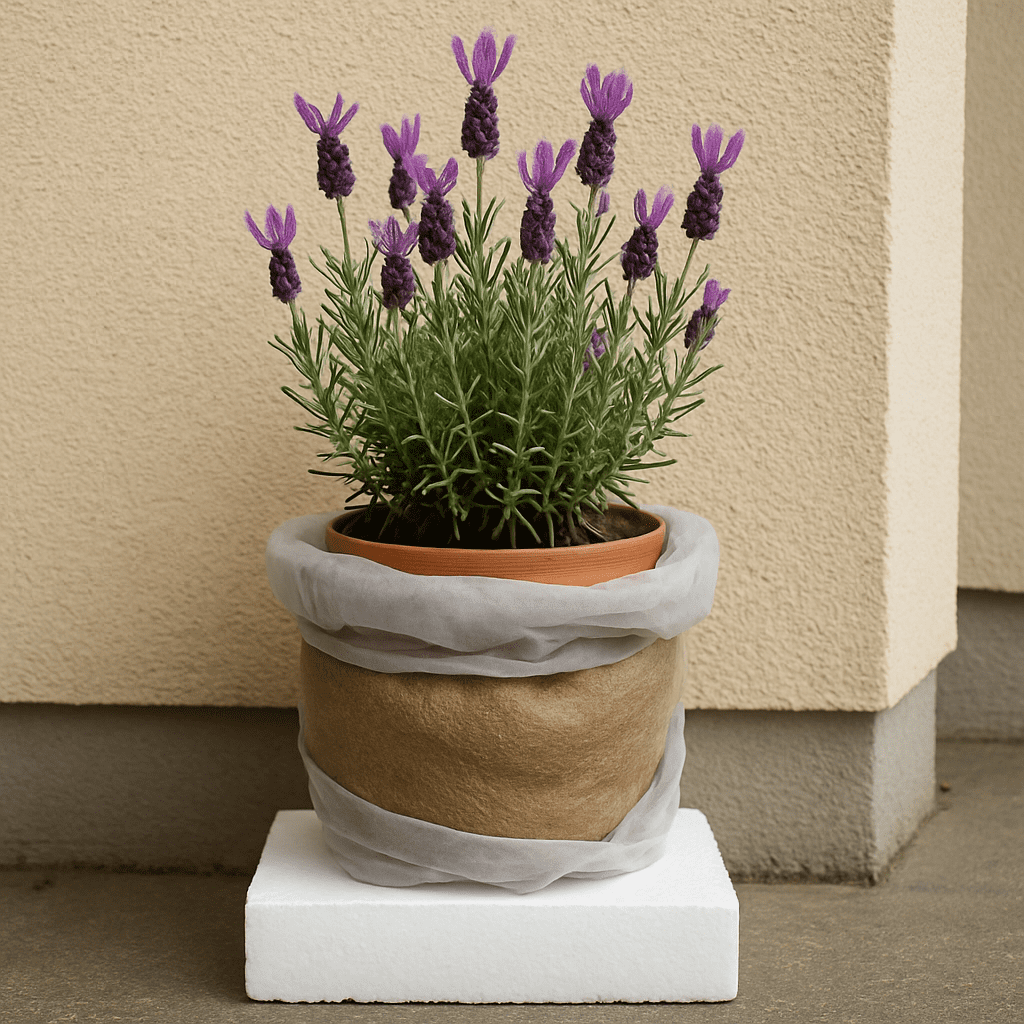
Your path to a Mediterranean sea of blossoms on your patio and balcony
You now know exactly how to make your catmint bloom magnificently. With plenty of sunshine, acidic soil, lime-free water, and a gentle trim, you can easily avoid typical care mistakes.
The best way to start your Mediterranean project is directly with this simple plan:
- Shopping Choose sturdy plants with many closed buds.
- Repotting Plant the lavender immediately in acidic rhododendron soil.
- Location selection Reserve the warmest, sunniest spot for him.
Soon, this fragrant garden for sunny locations will enrich your everyday life. As insect-friendly blooming plants for pots, the striking flowers attract countless bees. Simply step outside, breathe in the resinous fragrance, and enjoy the sight of your buzzing, purple-glowing balcony!