
Care and breeding of Aeonium plants
Among the countless succulents that adorn our windowsills and gardens, the Aeonium holds a very special place. With its architectural, often colorful rosettes, which sit atop long, woody stems, it inevitably catches everyone's eye. However, the care of these fascinating plants differs in some essential points from that of other succulents.
This guide will teach you everything you need to know about breeding, propagating, and keeping these exotic beauties healthy.
Botanical Background and Site Selection
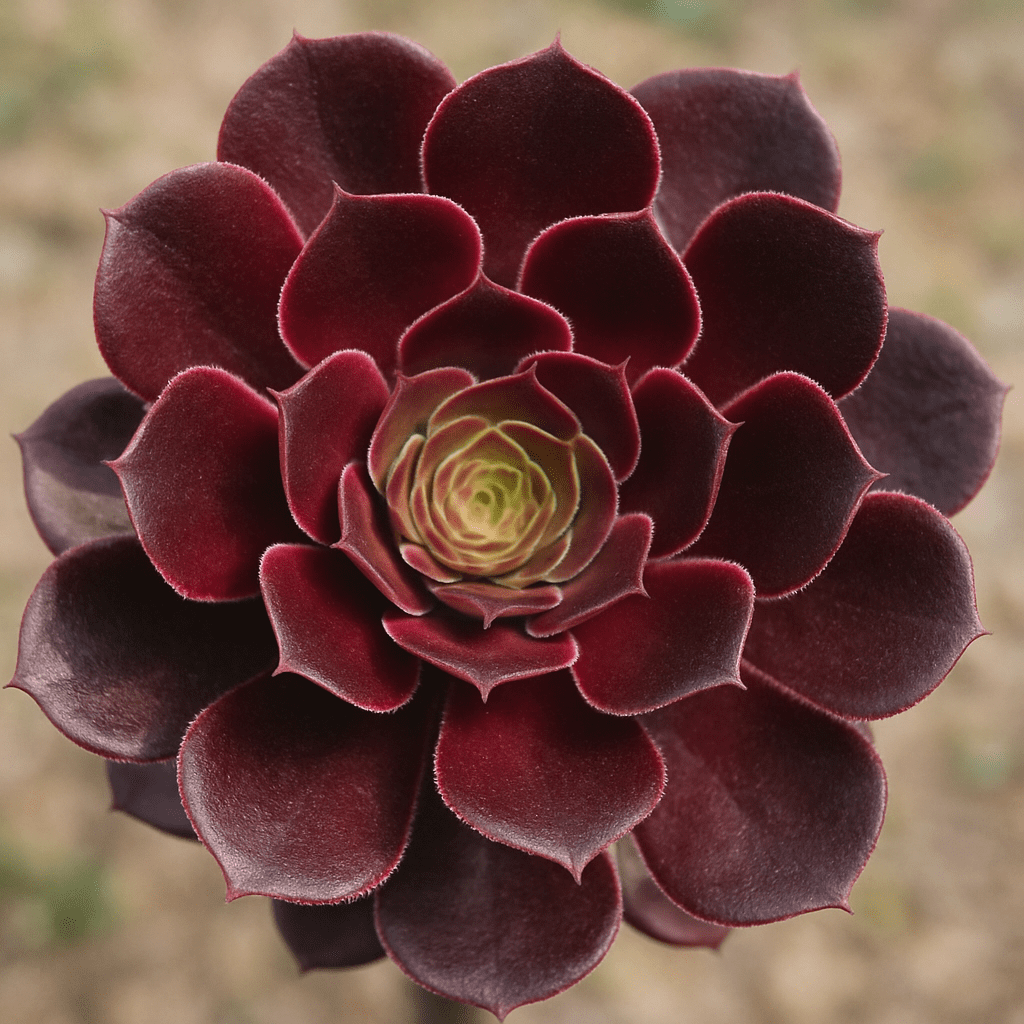
Originally, most Aeonium species come from the Canary Islands. Those who delve deeper into botany and learn about the Crassulaceae family growth patterns (Growth patterns of succulents) informs that Aeonium species grow uniquely. With time, they form woody stems, which is why they are often called tree houseleeks.
Beginners are often confused about plant identification. In international forums, the comparison Houseleek vs. Echeveria a recurring theme. The main difference: Echeverias usually grow close to the ground and have very fleshy leaves, while Aeoniums have thinner leaves and form tree-like, upright structures.
Assessing lighting needs correctly
Light is the key to compact, color-intensive rosettes. If you Indoor vs. Outdoor Light Requirements for your plants, you should consider the following:
- Indoors: A bright south-facing window is ideal. Without sufficient light, the plants will turn green and grow leggy.
- Outdoors In spring and fall, they love direct sunlight. However, in midsummer, a spot with partial shade is recommended to prevent sunburn.
Special care should be taken with variegated (multi-colored) varieties. Here are specific Variegated foliage sun protection tips Important: The light-colored, chlorophyll-free leaf areas burn particularly quickly, which is why these varieties absolutely must be protected from the harsh midday sun.
Aeonium Care: Watering, Soil, and Growth Cycle
The successful Aeonium Care requires a rethink, especially if you already own other succulents. They have an inverted growth cycle. The plants grow mainly in late winter and spring. In specialist circles, this is often referred to as the Winter succulent care.
Substrate and water supply
Since they grow in rocky coastal regions, they need a soil that does not retain water but is still somewhat more nutritious than pure desert sand. If you search online for the The best potting soil for Canary Island species is a well-draining mix that mimics their native volcanic soils. Here’s a breakdown of what to look for and how to create it: **Key Components:** * **Inorganic Grit/Drainage:** This is the most crucial element. Canary Island natives often grow in sandy, rocky, or volcanic soils. * **Perlite:** Lightweight, porous volcanic glass that improves aeration and drainage. * **Pumice:** Porous volcanic rock that also provides excellent drainage and aeration. * **Coarse Sand:** Horticultural or builder's sand (not fine play sand) can be used, but perlite and pumice are generally preferred for better aeration. * **Lava Rock (small grain):** Similar benefits to pumice. * **Turface (calcined clay):** Helps with drainage and aeration. * **Organic Matter:** Provides nutrients and helps retain some moisture. * **Potting Mix/Peat-Free Compost:** Use a good quality, well-draining potting mix as a base. Avoid mixes that are too heavy or retain excessive moisture. Peat-free options are more sustainable and often perform better. * **Coco Coir (briefly):** Can be a component, but use in moderation as it can retain more moisture than ideal for some Canary Island species. Ensure it's buffered. * **Optional Additives (for specific needs):** * **Worm Castings:** A gentle, nutrient-rich addition for long-term feeding. * **Charcoal (horticultural):** Can help with drainage and act as a mild fungicide/bactericide. **Recommended Ratios (General Guidelines):** The exact ratio will depend on the specific species and your climate. A good starting point for most Canary Island species is: * **40-50% Inorganic Grit/Drainage Material (Perlite, Pumice, Sand, etc.)** * **50-60% Organic Potting Mix/Compost** **Examples of Pre-Made Mixes to Consider (and then amend):** * **Cacti and Succulent Mix:** These typically have a good amount of grit already incorporated. You may want to add more perlite or pumice to them. * **Orchid Bark Mix:** Some orchid mixes contain components like bark, perlite, and charcoal that can be a good base. **How to Create Your Own Mix:** 1. Start with a good quality, peat-free potting mix or compost. 2. Add a generous amount of perlite and/or pumice. Aim for at least a 1:1 ratio of potting mix to grit initially. 3. Mix thoroughly. 4. Test the drainage: Water the mix until it's saturated. It should drain completely within a few minutes. If water pools, add more grit. If it drains *too* quickly and looks like it will dry out instantly, you might have added too much grit, but for Canary Island species, this is usually preferable to too much moisture. **What to Avoid:** * **Heavy Garden Soil:** Too dense, holds too much water. * **Fine Peat Moss Mixes (unless amended):** Can become waterlogged. * **Over-fertilized Mixes:** Many Canary Island species prefer leaner conditions. * **Sand that is too fine:** Can compact and hinder drainage. **Specific Species Considerations:** * **Drier Climate Species (e.g., some Euphorbias native to arid Canaries):** Lean more heavily on inorganic components (60-70% grit). * **Species from slightly more humid areas (e.g., some Aeoniums):** Can tolerate a bit more organic matter, but drainage is still paramount. By focusing on excellent drainage and mimicking their native volcanic substrate, you'll provide the best environment for your Canary Island species to thrive. search, you often find the following ideal mix:
- 40 % high-quality, peat-free potting mix
- 30 % Pumice
- 30 % lava granules or perlite
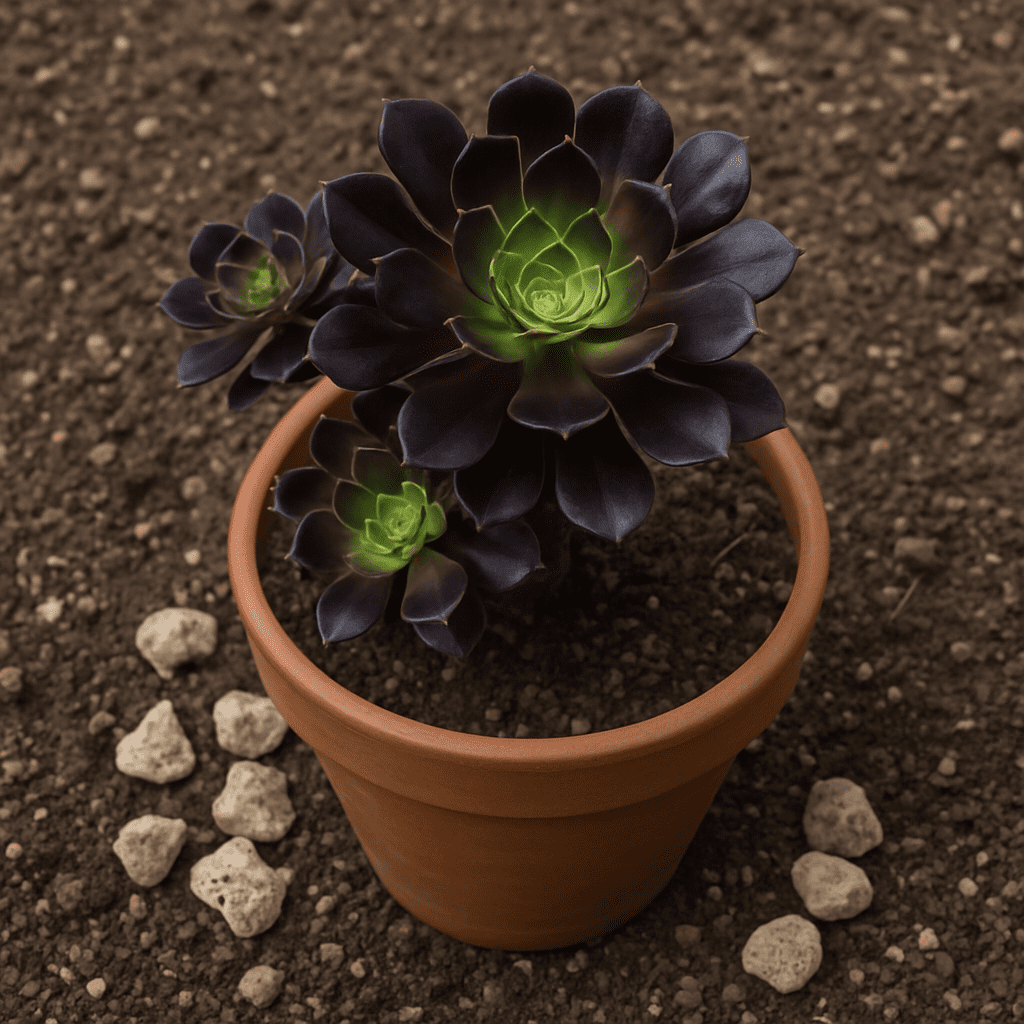
The Aeonium arboreum care is an excellent example of proper watering. During the spring growth phase, you can water the plant thoroughly as soon as the top centimeters of soil are dry.
However, as soon as the hot summer months begin, the Aeonium goes into summer dormancy. The rosettes contract tightly to conserve water. The main rule here is: Preventing summer dormancy root rot. During this time, water only sparingly, a maximum of once a month, to prevent the fine roots from drying out. A waterlogged root ball in summer will inevitably lead to fatal root rot.
Excursion: Zwartkop Care
One of the most popular varieties is Aeonium arboreum ‚Zwartkop‘ (or Schwarzkopf). The Black rose plant care requires a keen sense of light: The leaves only turn deep black in sufficient sunlight. If it's too dark, the center of the rosette quickly turns green again.
Landscape Design and Garden Integration
In regions with mild winters (or as potted plants on the summer patio), Aeoniums are fantastic structural plants. Landscape architects use them worldwide for drought-tolerant landscape design ideas. Combined with ornamental grasses, agaves, or large pebbles, they create low-maintenance, water-saving garden landscapes that appear both modern and Mediterranean.
Combatting typical problems and pests
Even with the best care, problems can arise from time to time. It pays to correctly interpret the plant's warning signs.
Leaf drop and limp leaves
Many plant owners panic and ask themselves in forums: Succulent leaves can droop and fall for a variety of reasons, but the most common culprits are overwatering or underwatering. **Overwatering:** This is the most frequent cause of drooping and falling leaves in succulents. When a succulent is overwatered, its roots sit in soggy soil, which prevents them from getting enough oxygen. This can lead to root rot, a fungal disease that damages the roots and makes them unable to absorb water. The plant then can't get the water it needs, and the leaves will start to turn yellow, become mushy, and eventually fall off. The base of the stem might also look soft and brown. **Underwatering:** While less common than overwatering, underwatering can also cause problems. If a succulent doesn't receive enough water, its leaves will start to shrivel, wrinkle, and eventually dry out and fall off. The leaves will typically feel dry and papery to the touch. **Other potential causes include:** * **Poor Drainage:** If the pot or soil doesn't drain well, it can lead to waterlogged roots, essentially causing the same problems as overwatering. * **Too Much Sun:** While succulents generally love sun, intense, direct sunlight, especially during the hottest parts of the day, can scorch the leaves. This can cause them to turn brown, crispy, and fall off. * **Too Little Sun:** Conversely, if a succulent doesn't get enough light, it can become "leggy" (stretching out with weak, spindly growth) and its leaves may droop and eventually fall off as the plant struggles to survive. * **Pests:** Mealybugs or spider mites can weaken a succulent by sucking the sap from its leaves. This can lead to yellowing, drooping, and leaf drop. * **Temperature Extremes:** Succulents are sensitive to drastic temperature changes, both hot and cold. Extreme heat can cause wilting and leaf drop, while freezing temperatures can damage tissues and lead to mushy, falling leaves. * **Natural Leaf Drop:** As succulents grow, they naturally shed older leaves from the bottom of the plant. This is usually a gradual process and the fallen leaves will typically be dry and shriveled. However, if a lot of leaves are falling suddenly, it's a sign of a problem. * **Repotting Stress:** Sometimes, after repotting, a succulent might experience a bit of shock, leading to some temporary leaf drop. **To determine the specific cause for your succulent, consider:** * **Your watering habits:** How often do you water? How do you determine when it's time to water? * **The soil and pot:** Is the soil well-draining? Does the pot have drainage holes? * **The light conditions:** How much light does the plant receive? Is it direct or indirect? * **The appearance of the leaves:** Are they mushy and yellow, or dry and shriveled? * **The plant's overall appearance:** Is it stretching, or does it look healthy apart from the drooping leaves? * **Recent changes:** Have you recently moved the plant, repotted it, or changed its watering schedule?The answer is often harmless. It's completely normal for an Aeonium to shed its lowest leaves as it forms new ones at the top – this creates the typical bare stem. However, if the leaves hang limply and feel mushy, this is usually a sign of overwatering. On the other hand, if the leaves are dry and shriveled (outside of the summer dormancy), it lacks water.
Pest control
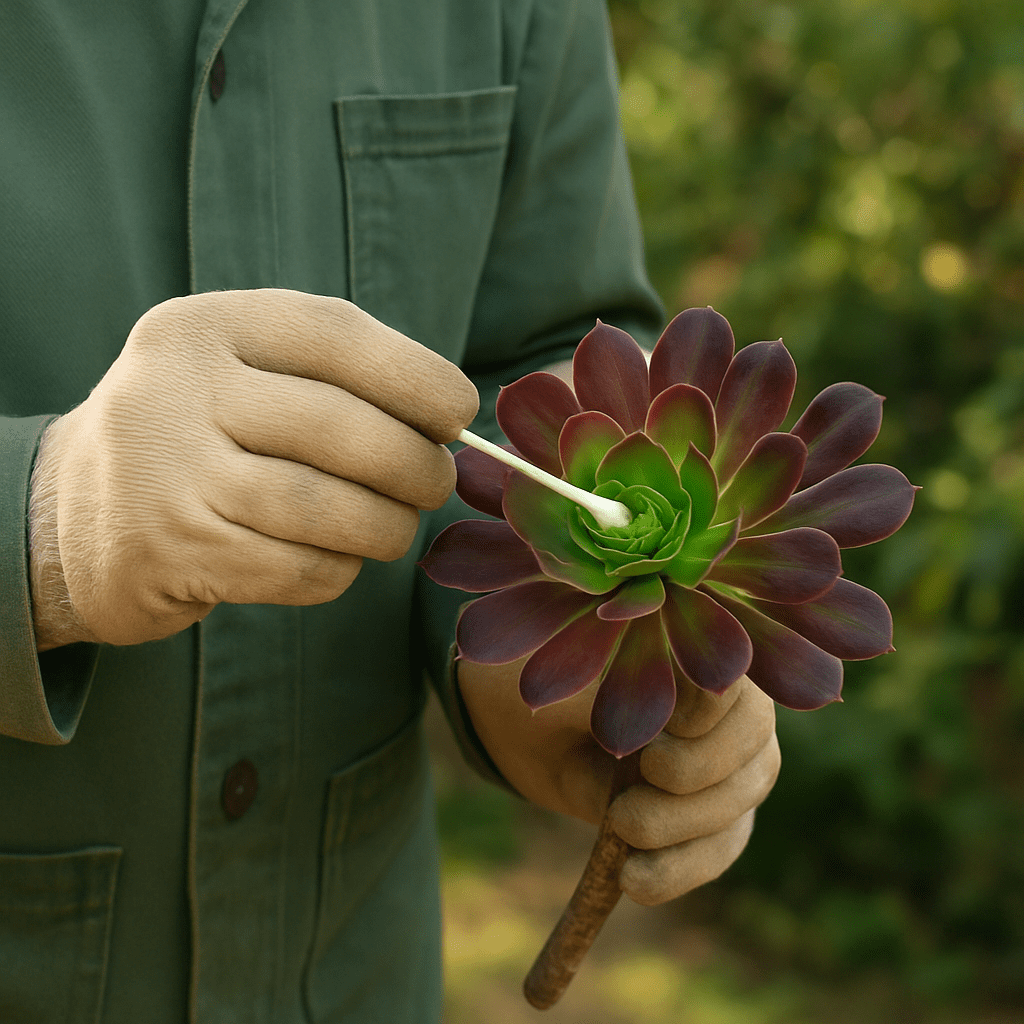
Unfortunately, the dense foliage of the rosettes is an ideal hiding place for pests. The topic treating mealybugs on rosette plants (Woolly aphids) is particularly relevant for Aeonium owners. Here's how to do it:
- Isolate the affected plant immediately.
- Spray the pests with a mixture of water, a squirt of mild liquid soap, and some neem oil.
- In case of severe infestation, you can also carefully dab the white, cotton-wool-like nests with a cotton swab dipped in isopropyl alcohol.
Propagation and Rejuvenation (Breeding)
Over the years, Aeonium plants can grow very large. It often happens that they become unbalanced. The problem of the lower stems becoming bareFixing leggy woody stems) can be solved by targeted pruning.
The head cutting method
To rejuvenate old plants, professionals resort to Beheading method for stem rejuvenation (the „heading“). The rosette is cut off with a sharp, disinfected knife about 5 to 10 centimeters below the leaves. The remaining, bare stem in the pot often sprouts new, small side rosettes after some time.
For everyone who wants to learn thoroughly, How to propagate rosette cuttings, the following steps are crucial:
- Cut Cleanly detach the rosette.
- Drying Let the wound dry in a shady, airy place for 3 to 5 days. A hard callus must form to prevent rot.
- Planting Place the cutting in dry substrate.
- Wait Do not water for the first two to three weeks! The plant must first form new roots. After a few weeks, gently pull on the rosette – if you feel resistance, the rooting was successful.
The Bloom: A Unique Spectacle
Owners are often surprised when their Aeonium suddenly grows from the center after many years, takes on a pyramidal shape, and forms countless small, yellow, or star-shaped flowers. This moment is bittersweet.
In botany, in this context, the Monocarpic plants complete their entire life cycle, from germination to death, in a single flowering season. This means they flower once and then die. This contrasts with polycarpic plants, which flower multiple times throughout their lives. Here's a breakdown of the typical monocarpic life cycle: 1. **Germination:** The life cycle begins when a seed germinates, usually triggered by favorable environmental conditions like moisture, temperature, and light. 2. **Vegetative Growth:** The seedling grows into a mature plant, focusing on developing roots, stems, and leaves. During this phase, the plant stores energy and resources for the upcoming reproductive stage. This can take anywhere from a few weeks to several years, depending on the species. 3. **Reproductive Growth (Flowering):** Once the plant has accumulated sufficient resources and reached a certain developmental stage, it transitions to reproductive growth. This is the defining characteristic of monocarpic plants – they invest heavily in producing flowers, fruits, and seeds. This often involves a period of rapid growth and development of reproductive structures. 4. **Senescence and Death:** After successfully producing seeds, the monocarpic plant enters a phase of senescence, where its tissues begin to deteriorate. This leads to the death of the plant. The seeds are then dispersed to start the next generation. **Key characteristics of monocarpic plants:** * **Semelparity:** This is the term used to describe organisms that reproduce only once in their lifetime. Monocarpic plants are semelparous. * **Single reproductive event:** They prioritize all their accumulated resources into one major reproductive effort. * **Death after reproduction:** This is the inevitable outcome for monocarpic species. **Examples of monocarpic plants:** * **Annuals:** These plants complete their life cycle within one year or growing season. Examples include most common vegetables like tomatoes, cucumbers, corn, and beans, as well as many wildflowers like poppies and sunflowers. * **Biennials:** These plants take two years to complete their life cycle. The first year is dedicated to vegetative growth, and the second year is for flowering and seed production, after which they die. Examples include carrots, parsley, and foxgloves. * **Some Perennials:** While most perennials are polycarpic, some, like the agave (century plant), are monocarpic. They can live for many years (decades) with only vegetative growth before producing a spectacular flowering stalk and then dying. Bamboo species are another well-known example of long-lived monocarpic plants. Understanding the monocarpic life cycle is important in agriculture, horticulture, and ecology for managing crops, understanding plant community dynamics, and studying plant evolution.This means that the plant dies after seed production. Fortunately, with an Aeonium, only the rosette that has flowered dies. If your plant has multiple branches and side rosettes, these will continue to live and grow next year. You can simply cut off the flower stalk after it has withered.
Conclusion
An Aeonium is more than just a simple houseplant. With its rose-like heads and tree-like growth, it brings exoticism into any home. If you adapt to the rhythm of its growth and dormancy phases, pay attention to the right substrate, and reduce watering in the summer, you will enjoy these majestic Canary Island natives for years to come. Don't hesitate to try propagating them either – before you know it, one succulent will become an entire collection!